
Once plentiful across North America, bison faced near extinction due to hunting, leading to significant changes in their genetic makeup. New research analyzing their DNA has unveiled insights into the decline and gradual resurgence of bison herds, altering the species forever.
Published in the journal Science, the study involved sequencing 160 bison genomes, creating a genetic roadmap spanning 20,000 years. Conducted by a team of nearly 40 scientists, including many Canadians, the research was spearheaded by paleogeneticist Jonas Oppenheimer and the Paleogenomics Lab at the University of California, Santa Cruz.
The aim of the study is to inform modern conservation efforts by unraveling the intricate genetic history of bison. By understanding the genetic complexities, researchers hope to enhance the well-being and survival of these majestic animals.
Modern bison populations, once highly interconnected, are now fragmented into managed groups. This fragmentation poses challenges to their resilience, as genetic diversity becomes a concern.
According to Oppenheimer, bison populations were genetically similar across North America until recently. However, today’s bison exhibit significant genetic variations based on their herds, a consequence of past bottlenecks caused by human activities.
Genetic Evolution
By sequencing bison genomes from ancient bones and modern herds, scientists traced how the species’ genetic diversity has evolved over time. Samples were collected from managed herds in Canada and the United States, as well as from wild herds in various regions.
The research involved analyzing 115 ancient bison genomes and 45 modern genomes, combined with existing data to create the most comprehensive genetic map of bison to date. This collaborative effort was hailed as a significant advancement in understanding bison genetics.
Chris Jass from the Royal Alberta Museum emphasized the importance of using ancient DNA to inform present-day herd management practices. The study highlights the value of long-standing collections in shedding light on evolutionary questions.
Through genetic analysis, researchers could observe how the bison population’s structure, diversity, and genetics were impacted by historical population declines.
Historical Shifts
Historically, bison freely roamed the continent, maintaining a diverse gene pool. However, in the late 19th century, extensive hunting and government actions led to a drastic decrease in population numbers.
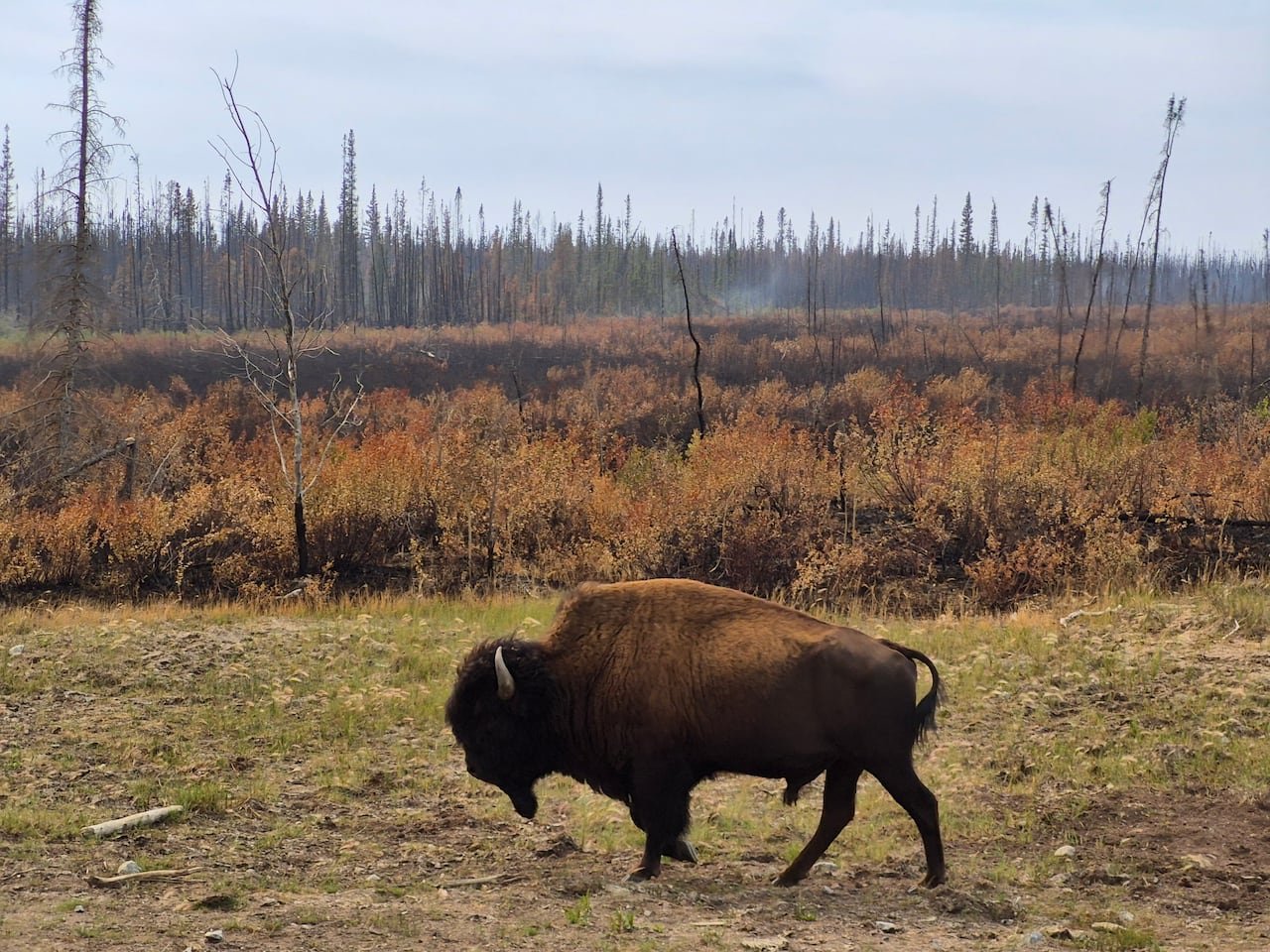
A wood bison bull walks near a recently burned area in Mackenzie, Northwest Territories. (Greg Wilson/Parks Canada)
Despite the initial decline, genetic diversity remained relatively stable due to the species’ prior widespread distribution. However, the study revealed that much of this diversity is now confined within distinct herds, leading to genetic isolation.
The study also highlighted the significant divergence between wood bison and plains bison, indicating distinct subspecies with unique adaptations and habitats.
The findings underscore the importance of managing these subspecies separately to preserve their genetic integrity and uniqueness.
‘Conservation Strategies’
Collaborating with Bison Integrated Genomics, Greg Wilson co-authored the study to enhance bison conservation through genomic research and the establishment of a bison genome biobank.
<p class="paragraph-b3GxD html

