
On Sunday, several Canadian websites, including those of the federal government, exhibited maps where Lake Ontario was mistakenly labeled as Lake America. This change followed Google Maps’ adjustment to comply with a directive by U.S. President Donald Trump, as announced on Saturday.
Google stated in a post on its corporate website that the adjustment was made based on the U.S. government’s official geographic names database renaming the lake.
While Google mentioned that the alteration would impact only U.S. users, various Ontario-based and Canadian websites showed Lake America on their maps. Examples included Hydro One’s outage map, LCBO’s store locator, GO Transit’s station finder, and the federal government’s housing and infrastructure map.
Regarding the situation, a Hydro One spokesperson informed CBC News via email that they were aware of the incorrect labeling of Lake Ontario on their outage map and attributed the issue to a third-party mapping service. The spokesperson expressed regret for the error and assured that efforts were underway to rectify the geographic reference promptly.
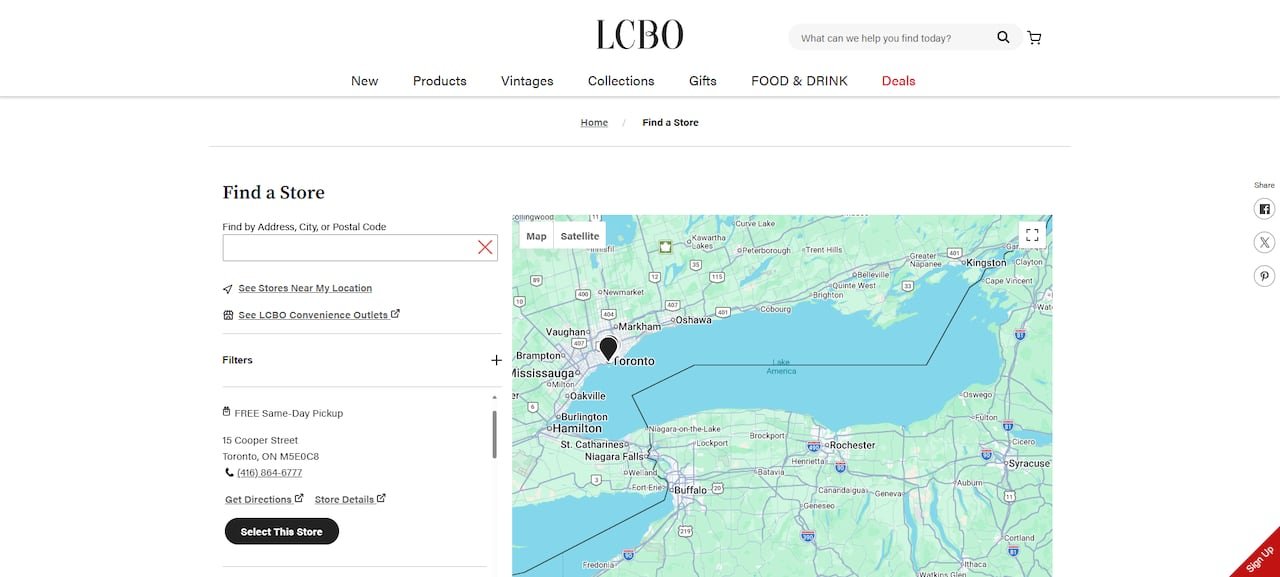
A snapshot from the Liquor Control Board of Ontario’s website on Sunday displayed Lake Ontario labeled as Lake America, with the map subsequently reverting to the correct name.
Metrolinx, a government agency in Ontario overseeing GO Transit, acknowledged the issue and stated that they were actively reviewing their websites to ensure accurate identification of Lake Ontario. Measures were being taken to disable the map function on the affected GO stations’ page.
By late Sunday afternoon, the map in question on GO Transit had been disabled, and the LCBO map had been corrected to display Lake Ontario once again.
While MapQuest affirmed it would not alter the lake’s name, Apple did not comment publicly on the matter, as reported by CBC News.
In a statement, Google clarified that website developers embedding Google Maps can choose a region to localize the map, determining the display of place names on sites.
Tech analyst and journalist Carmi Levy pointed out that Canadian websites like Hydro One and LCBO, despite being Canadian entities, likely utilized Google’s application programming interface (API) to power their maps. APIs lack location awareness, causing maps reliant on Google API to default to Lake America.
Levy emphasized that many companies and government bodies opt for third-party APIs over building their mapping software. He mentioned Google’s recommendation for developers to set their region as Canada on the backend to localize maps, highlighting the simplicity of the solution but acknowledging potential challenges in implementation for some due to lack of awareness or technical proficiency.
Google Maps tailors results based on a user’s location, ensuring individuals within Canada view Lake Ontario, even if they input Lake America. Moreover, global search index updates by Google now enable Lake America to be searchable worldwide, with searches outside North America displaying Lake Ontario followed by Lake America in brackets.
The incident underscores the implications of Canada’s reliance on American technology for digital services, underscoring the need for a domestic mapping solution or APIs, according to Levy.

