Kimberly Prost experienced the repercussions of the U.S. sanctions right away.
“These economic sanctions are profoundly impactful and not merely symbolic,” stated Prost, a Canadian judge at the International Criminal Court (ICC), who was sanctioned by the Trump administration last year.
According to Prost, her credit cards were rendered useless and her banking access was severely restricted due to the far-reaching influence of the U.S. on the global banking framework.
“Every time I attempt to execute a bank transfer, I find myself holding my breath, uncertain if it will succeed,” Prost expressed in a conversation with CBC News.
“Whether it’s hailing an Uber, reserving a hotel, or purchasing a theatre ticket, everything necessitates some type of credit card, which makes it quite challenging to adapt.”
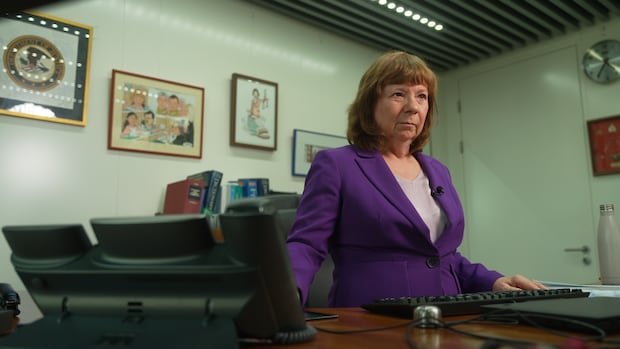
Kimberly Prost, a Canadian judge serving on the International Criminal Court since 2018, recounts how she and her colleagues have lost access to numerous American-based services, including Google, iCloud, and Amazon accounts, following sanctions from the Trump administration.
Located in The Hague, Netherlands, the ICC conducts investigations and prosecutes individuals accused of genocide, war crimes, and crimes against humanity when the courts in its 125 member nations, including Canada, are either unwilling or unable to take action.
The sanctions imposed on Prost are part of a broader U.S. initiative to undermine and dismantle the ICC, which intensified after a February 2025 executive order was enacted due to investigations involving American personnel and the issuance of arrest warrants for Israeli Prime Minister Benjamin Netanyahu and his former defense minister Yoav Gallant.
President Donald Trump has persistently criticized the international court, urging member nations to promptly “withdraw from this rogue institution” during a speech at the UN General Assembly in September. Just last month, Secretary of State Marco Rubio threatened to dismantle the ICC “brick by brick” unless allies take action to “rein in” the court.
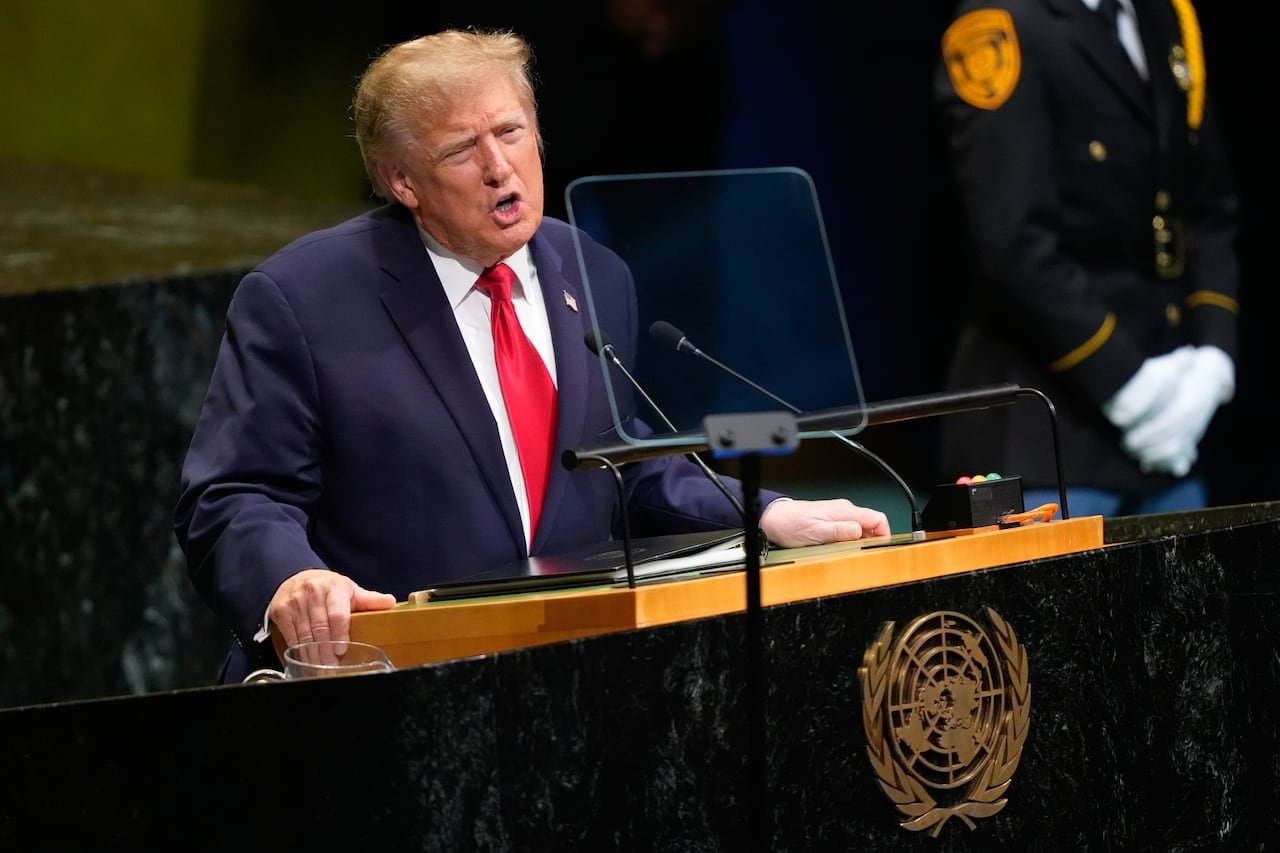
During a speech at the United Nations General Assembly on September 22, 2026, U.S. President Donald Trump called on the member nations of the International Criminal Court to ‘officially resign from this rogue institution immediately.’ (Yuki Iwamura/The Associated Press)
Prost asserts that these actions constitute an assault on the international criminal justice system and the rule of law that has developed since World War II.
“This is an attack that envisions a world where victims of atrocity crimes are disregarded. It promotes impunity and seeks to eliminate accountability for these crimes. That is the only way to frame it.”
Rubio warns ICC endangers Americans
Prost was targeted due to her involvement in authorizing a preliminary investigation in March 2020 into alleged war crimes in Afghanistan dating back to 2003, including actions by U.S. service members.
However, since 2021, the investigation has shifted focus away from U.S. involvement, concentrating instead on the Afghan government and Taliban forces.
“To my knowledge, there is no ongoing investigation concerning Americans in this case, yet I am sanctioned.”
The United States has never joined the ICC and has consistently raised concerns about the potential prosecution of its citizens.
“As the United States seeks to foster peace globally, our diplomats or soldiers could find themselves implicated in this court,” President George W. Bush stated the day after the court’s establishment in 2002. “This is a significant concern for me.”
Twenty-four years later, Rubio reiterated similar sentiments regarding the “threats” posed by the international court, cautioning that American border agents, marines, and prosecutors could “be subjected to the rulings of foreign judges,” potentially facing imprisonment for actions taken to protect their nation.
Nevertheless, Prost argues that Rubio’s assertions are deceptive, as the ICC would possess “no authority” if the U.S. exercised its sovereignty and conducted legitimate investigations or prosecutions in response to allegations.
Member states ‘have to protect’ ICC
In June, Prost and two other ICC judges filed a lawsuit against the Trump administration, challenging the sanctions they claim are “intended to impose extra-judicial pressure” and compel them to “favor their personal interests over adjudicating cases based on the law and evidence.”
“We concluded that the impact was so significant and obstructive to our work — and to the court’s operations — that we needed to contest it in the U.S. courts,” Prost explained.
In July, four former U.S. ambassadors and prosecutors of international criminal tribunals submitted a brief supporting the ICC judges, asserting that the sanctions “penalize independent judicial decision-making.”
Canadian officials have not intervened in Prost’s lawsuit. However, in a September interview with CBC News, Foreign Minister Anita Anand remarked that Canada “remains dedicated to the ICC process.”
“As a sovereign nation, we determine our foreign policy, which includes the principles guiding that policy,” Anand noted. “One of those core principles is adherence to international law.”
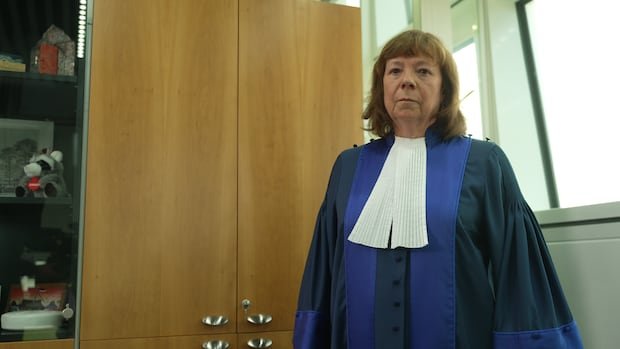
Despite the economic sanctions imposed on her by the U.S., International Criminal Court Judge Kimberly Prost asserts she would ‘never consider abandoning’ her work and the pursuit of justice for victims of atrocity crimes.