The federal government is moving forward with the process to potentially classify the Roberts Bank Terminal 2 port expansion in Metro Vancouver as a project of national significance.
A notice published in the Canada Gazette on August 29 initiates a 30-day consultation phase regarding the designation of the port expansion as a project of national interest under the Building Canada Act.
This legislation enables projects identified as being in the national interest to have their approval processes, including environmental assessments, expedited.
In announcing the possible designation of both the terminal and the Mackenzie Valley Highway project in the Northwest Territories, the Liberal government stated that these projects “have the potential to bolster Canada’s transportation and trade networks … and enhance Canada’s long-term economic sovereignty.”
Nevertheless, environmental organizations express concerns that fast-tracking the port expansion could allow the government to circumvent environmental safeguards.
The Roberts Bank Terminal 2 (RBT2) expansion initiative, overseen by the Vancouver Fraser Port Authority, proposes a three-berth container terminal that would augment the port’s capacity by nearly 50 percent, generating about $100 billion in annual trade capacity, as reported by the port authority.
In 2023, the federal government approved the project with 370 legally binding conditions aimed at addressing environmental issues. The same year, British Columbia granted the project an environmental assessment certificate containing 16 additional conditions.
In their decisions, both government tiers recognized that the project could likely result in significant adverse environmental impacts, but deemed it “justified in the circumstances.“
The RBT2 project is still in the stage of obtaining final environmental permits, including legal approval from Fisheries and Oceans Canada concerning compliance with the Species at Risk Act (SARA).
Should the project receive national-interest designation, Prime Minister Carney’s cabinet could gain the discretionary authority to exempt it from SARA.
In July, Prime Minister Mark Carney announced a $10 billion federal investment in the expansion project as part of a larger agreement with British Columbia.
The expansion is set to take place in the Fraser River estuary, a location that environmentalists argue is critical for the survival of hundreds of species, many of which are endangered.
‘Mega port’ in an ‘incredibly important breeding ground’
“This ecosystem serves as an incredibly vital breeding ground for over a hundred at-risk species,” remarked Julia Levin, the associate director of national climate with Environmental Defence, a Canadian environmental advocacy organization. “It places a mega port directly in the heart of this area, destroying nearly 200 hectares of this highly biodiverse estuary.”
Last year, a Federal Court judge dismissed a lawsuit filed by several environmental organizations claiming that the project would obliterate crucial chinook salmon habitat and jeopardize the existence of southern resident killer whales.
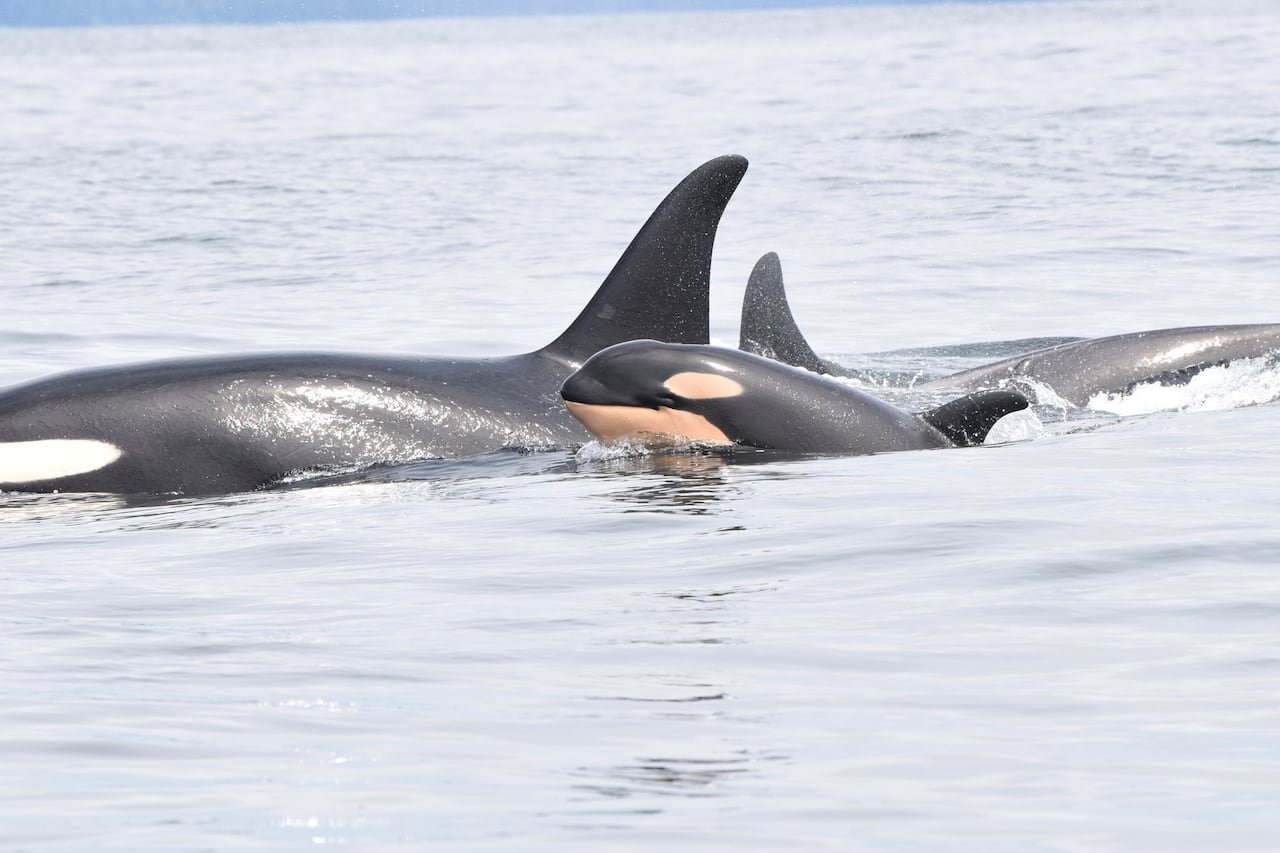
Southern resident killer whales swim near the southwest coast of Vancouver Island. Numerous scientists have sent an open letter to the federal government expressing concerns regarding proposed amendments to the Species at Risk Act that they believe could affect endangered species, including the southern resident. (Fisheries, Oceans and Canadian Coast Guard/Reuters)
Southern resident killer whales — commonly known as orcas — are among over 600 wildlife species protected under the Species at Risk Act. Only 75 southern residents remain.
Chinook salmon, which is under consideration for listing under SARA, is a primary food source for the southern resident. However, the region has lost about 85 percent of its salmon habitat due to development and infrastructure, according to a 2021 study.
In response to environmental worries, the port authority stated in an emailed response to CBC News that it intends to restore 102 hectares of habitat in partnership with First Nations to “support key species like juvenile Chinook salmon and Dungeness crab.”
The port authority also mentioned that it is enhancing protections for southern resident killer whales, which includes requiring vessels to participate in slowdown initiatives aimed at minimizing underwater noise.
British Columbia’s Environmental Assessment office highlighted the legally binding conditions, asserting in an emailed statement to CBC News that once construction commences, officials will “monitor the project for adherence to all provincial requirements throughout the project’s duration.”
Last spring, the federal government proposed a budget of $258 million over five years for the conservation of whales and their habitats, allocating $95 million over five years and $16.5 million annually thereafter specifically for the safeguarding of southern resident killer whales.
Nonetheless, Levin and other environmental groups argue that the government’s inclination to expedite these projects serves as a means to proceed with them “at any cost,” even at the expense of the southern resident’s well-being.
Getting projects built at ‘any cost’
“The federal government is evidently exploring multiple routes to circumvent environmental protections,” stated Levin.
In addition to potentially fast-tracking several significant projects, including a new West Coast pipeline leading to Roberts Bank, the Carney administration is contemplating further alterations to environmental regulations, such as the Species at Risk Act, which it claims would facilitate quicker approvals and construction of major initiatives.
“All of this revolves around overriding environmental safeguards, environmental legislation, and species protections to ensure that certain projects are constructed at any cost,” Levin remarked.
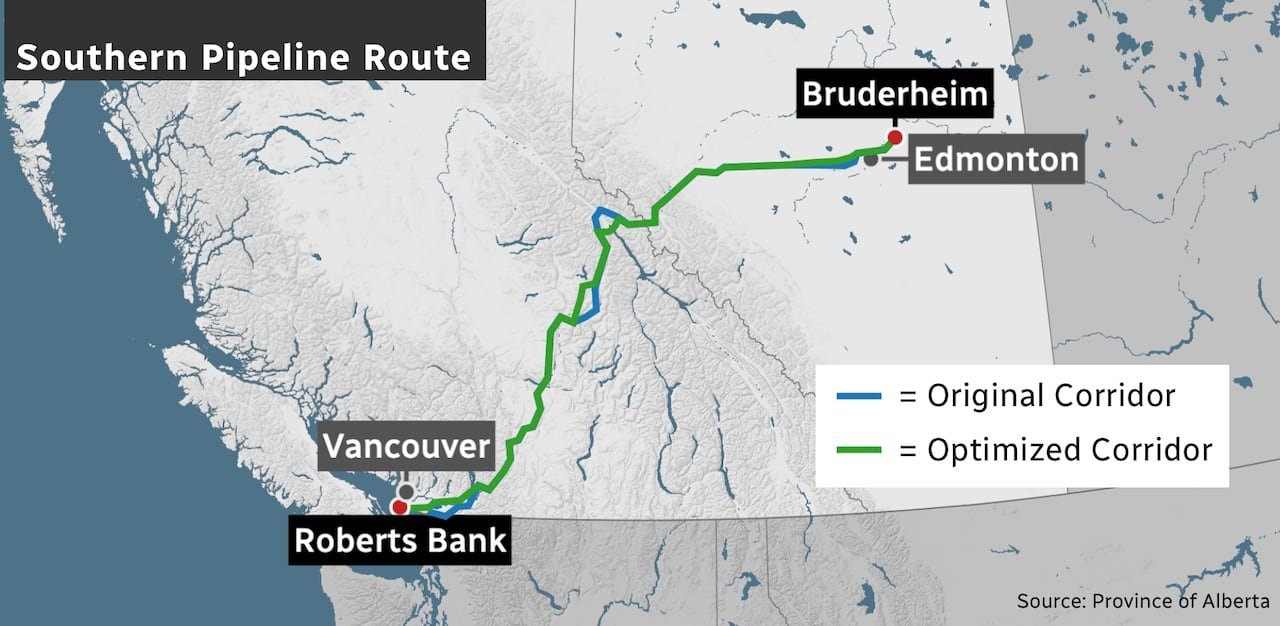
Alberta’s pipeline proposal currently includes two primary routing options, both leading to an export terminal in southern B.C., which would increase tanker traffic in the Salish Sea. (Province of Alberta)
The modifications under consideration by the government would render the Species at Risk Act — and the protections it affords — “meaningless,” as stated by multiple scientists in a press release last month.
In May, two federal discussion papers proposed various potential changes, including exemptions for certain projects from the “jeopardy test” in the Species at Risk Act. Following backlash from First Nations and environmental advocates, the government extended the engagement period, which concluded in July.
“We are suggesting, quite emphatically and straightforwardly to the minister, that this might not be the optimal approach,” commented David Green, a biologist and professor emeritus at McGill University, who is one of the former COSEWIC chairs involved in the letter.
“You shouldn’t grant yourself unrestricted freedom to act without careful consideration.”