On a cloudy Wednesday afternoon at his marina in Sackets Harbor, N.Y., Mayor Alex Morgia gazes over the water and describes the stunning scenery he frequently witnesses, even when the sky is grey.
“Sometimes those are the most beautiful sunsets because the sun can shine through underneath, resulting in vibrant hues on the lower side of the clouds,” Morgia explains, casting his eyes over what has turned into North America’s most contentious lake.
“We enjoy sunsets over the lake all year round,” Morgia adds, specifying: “Over Lake Ontario, to avoid any ambiguity.”
Sackets Harbor, situated on the eastern shore of the lake and approximately a 40-minute drive from the Canadian border, is embroiled in a verbal and trade dispute as the United States and Canada clash over tariffs and U.S. President Donald Trump’s choice to rename Lake Ontario to “Lake America.”
Morgia notes that the harbour was mentioned in Trump’s executive order.
This isn’t the first occasion the charming village has found itself at the center of a dispute between the two nations: Sackets Harbor was the battleground for two significant confrontations during the War of 1812, as Morgia recounts.
“Residents often discover cannonballs in their yards,” he remarked. “They even use them as doorstops.”

Alex Morgia, mayor of Sackets Harbor, N.Y., mentions a brief period when U.S. President Donald Trump was occupied with other matters, hoping it would divert his attention from Canada to restore friendly relations. (Benjamin Lopez Steven/CBC)
While Morgia played down the extent of Trump’s support for the lake’s renaming, he — along with other U.S. residents and officials in upstate New York close to the border — fears that this escalating conflict might jeopardize the close ties with Canada, negatively impacting their communities.
“There was a moment when I thought he was preoccupied with other issues and would leave the Canadians alone, enabling us to be friends again. Clearly, that ship has sailed,” Morgia expressed.
‘It strikes at the core’
Approximately a half-hour drive north of Sackets Harbor, on the U.S. side of the Thousand Islands Bridge over the St. Lawrence River, Corey Fram is anxious that the already challenging situation he faces is about to worsen significantly.
As the director of the Thousand Islands Regional Tourism Development Corporation, Fram is in charge of marketing efforts on both sides of the border. However, he indicates that after Trump’s re-election, there was a noticeable drop in Canadian spending and border crossings.
“Losing the economic contributions of Canadian tourists on the New York side is painful. But in a border community, it resonates deeply,” Fram remarked.

The last long weekend of the summer is here. CBC’s Troy Charles investigates cross-border travel and, unsurprisingly, Canadians continue to steer clear of the United States.
While he recognizes that both Washington and Ottawa may be pursuing strategies that bolster their economic positions, those initiatives negatively impact border communities, he stated.
“It seems that those of us living near the border are bearing the consequences for what is purportedly an economic advantage for the greater good of each country,” Fram remarked.
Anthony Adamczyk is confronting the same challenges in Ogdensburg, N.Y., located about a 45-minute drive northeast. He serves as the executive director of the Ogdensburg Bridge and Port Authority, which oversees the local bridge across the St. Lawrence.
Despite a slight rise in border crossings from Canada in January 2025 compared to the prior year, the numbers dropped again in February and have not rebounded, Adamczyk noted.
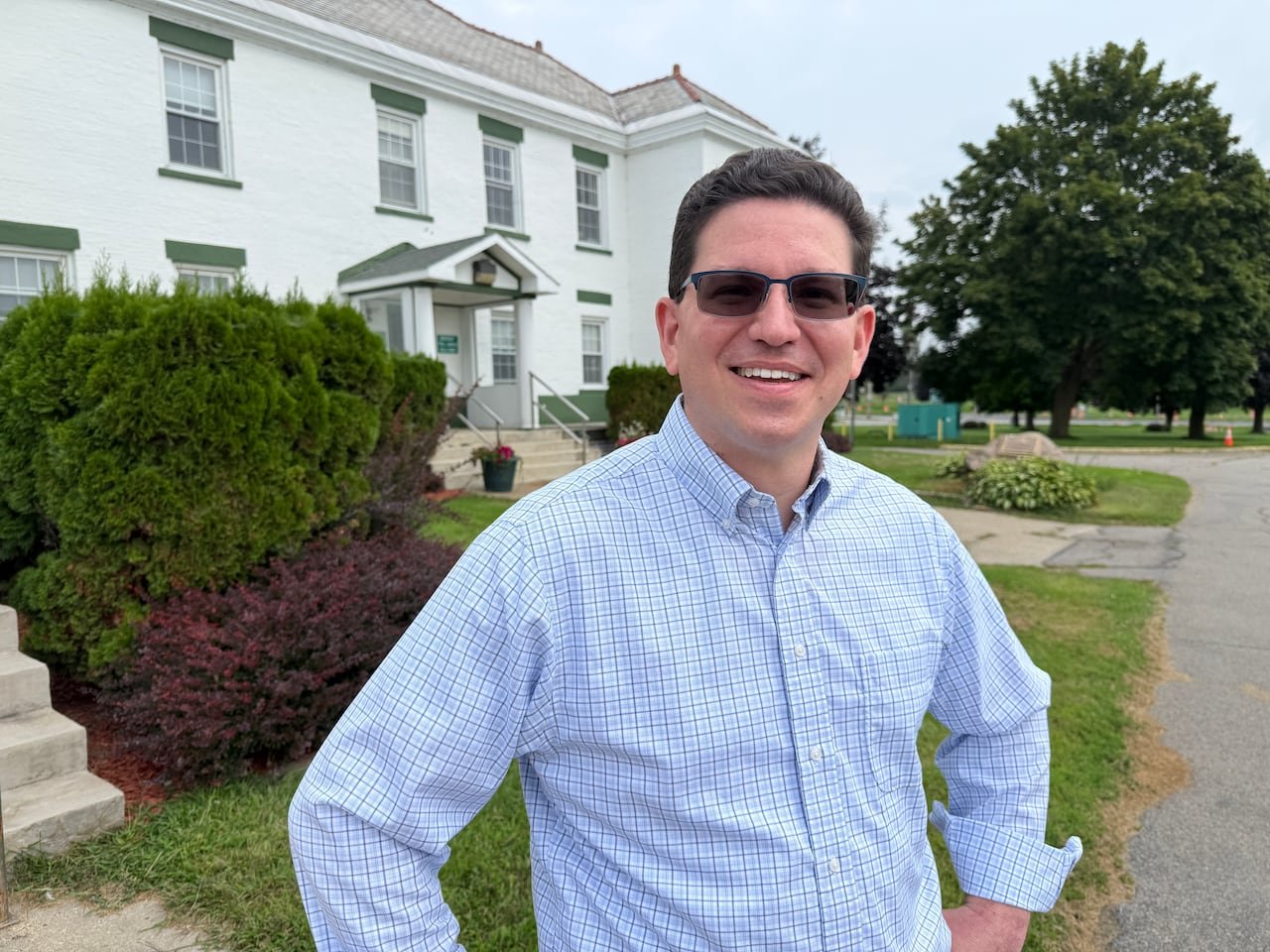
Anthony Adamczyk, executive director of the Ogdensburg Bridge and Port Authority, reports that traffic from Canada at the border crossing fell by 23 percent in 2025 compared to 2024. (Benjamin Lopez Steven/CBC)
In total, traffic volume dropped by 23 percent in 2025 compared to 2024, amounting to roughly 136,000 vehicles. The revenue from bridge tolls decreased by 35 percent, equating to an approximate loss of $536,000.
Fram’s long-term worry is that the influx of Canadian tourists may permanently decrease. He informed CBC’s The House that each time a significant crisis affects border crossings — like the COVID-19 pandemic or the terrorist attacks of 9/11 — the figures decline and rarely return to previous levels.
“My fear is that this is yet another major setback, a significant drop from which we won’t recover to where we were in 2024 anytime soon, if ever.”
Residents split over Trump’s approach
The ongoing dispute regarding tariffs and the renaming of Lake Ontario places residents of Ogdensburg and Sackets Harbor in a complex situation. Both areas are located in St. Lawrence County and Jefferson County, respectively — both of which Trump has decisively won in past presidential elections.
Outside a Walmart in Ogdensburg, Greg Barr shared with The House that he frequently visits Canada and has never encountered any problems with Canadians. However, when questioned about the trade conflict, he expressed that he believes the U.S. has been “much too generous.”
“Not just to Canada, but to other nations as well,” Barr said. “[Trump’s] leveling the playing field, in my opinion. He may have a different approach, but he achieves results.”
Jim Rupert, who operates a taxi service transporting clients to and from Canada, echoed Barr’s sentiment, asserting that Trump’s tactics are aimed at equalizing the economic landscape.
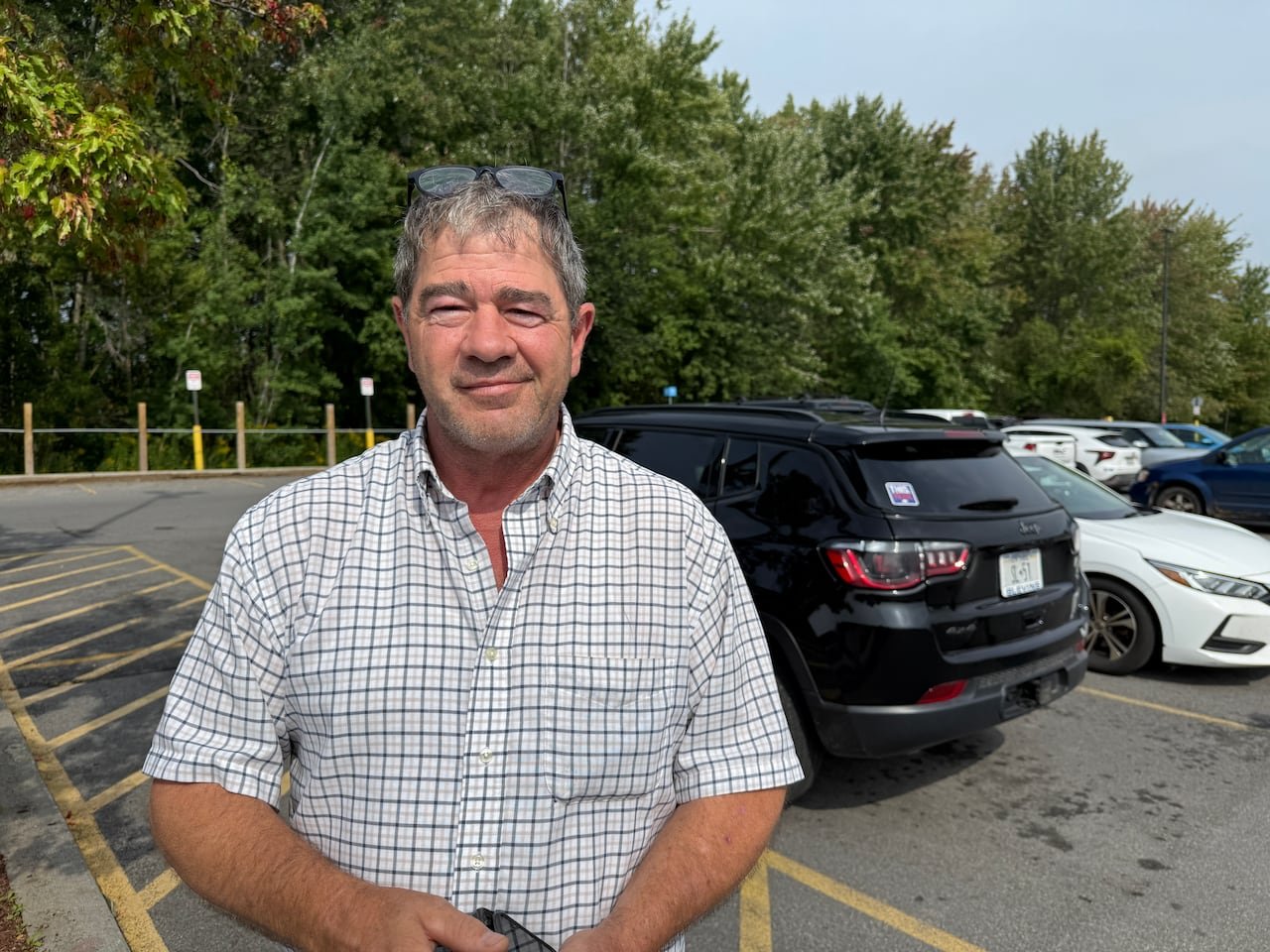
Taxi operator Jim Rupert believes Trump’s tariffs serve to level the economic playing field, suggesting that Canada could enhance its position by further developing its natural resources. (Benjamin Lopez Steven/CBC News)
“I dislike listening to [Trump] most of the time because he rambles and rants, but the policies are sound.”
Conversely, Carol and Gary Davis, who mention they’ve observed a noticeable increase in their grocery bills, struggle to comprehend Trump’s decisions.
“When he was elected, gas prices were supposed to drop, groceries were meant to be cheaper,” Gary noted. “The reality is quite the opposite.”
Carol, who cast her vote for Trump in the last election, expressed her disappointment in the president, admitting she felt there weren’t better alternatives at the time of voting.
“So, yes, I suppose I do have regrets now.”
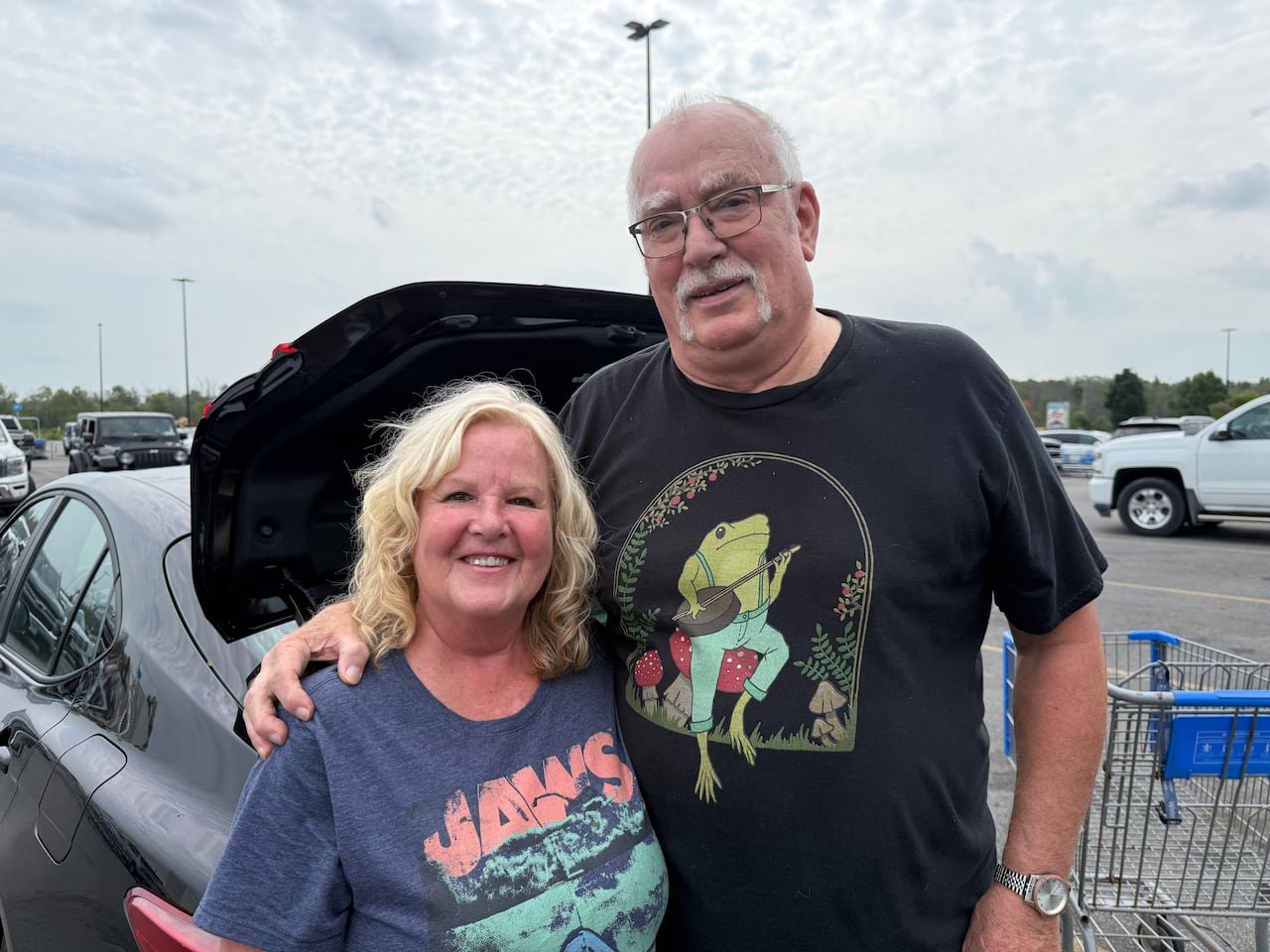
Carol and Gary Davis express that Trump promised more affordable gas and food — but the opposite has occurred. (Benjamin Lopez Steven/CBC)
Local Republican lawmaker shares insights
Scott Gray, a Republican assemblyman representing Ogdensburg and Sackets Harbor, acknowledges the concerns of residents. He conveyed to The House that while he doesn’t oppose tariffs, he wishes for them not to adversely affect either his constituents or Canadians.
“We have enjoyed a long-standing economic exchange and trade relationship, and I believe we should strive to maintain that,” Gray stated.
He expressed hope that key issues, such as U.S. access to the Canadian dairy market, can be resolved through trade discussions. However, he cautioned that tariffs and counter-tariffs can be disruptive.
Gray criticized the White House’s behavior, including Trump’s comments labeling Canada as the 51st state and U.S. Secretary of War Pete Hegseth deriding two female Canadian cadets.
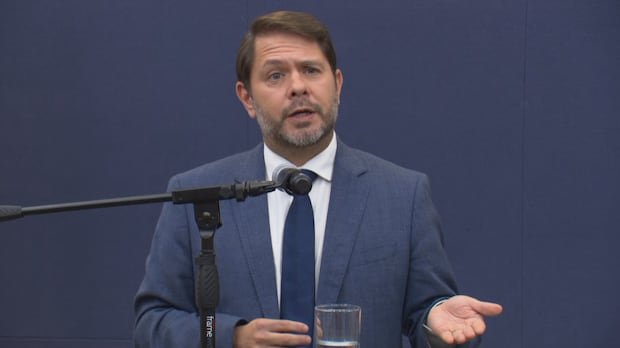
Arizona Democratic Sen. Ruben Gallego states that recent remarks concerning Canada’s military by U.S. cabinet officials are ‘deeply disrespectful to the men and women of Canada who fought alongside [the U.S.].’
Nonetheless, he also attributed some responsibility to Canada, particularly when Ontario Premier Doug Ford remarked that Trump could “kiss my ass” in response to tariff threats.
“We need to ensure a fair trade agreement without fostering hostility and friction, which is largely driven by various antics out there,” Gray remarked.
Back at the marina in Sackets Harbor, Morgia wonders if the U.S. government will cease antagonizing its northern neighbor. He expresses understanding of Canadians’ calls for Americans to urge their leaders to relent on punitive measures against their country.
“I suppose not until the [midterm elections in] November. People are trying, but currently, the Republicans have a firm hold on most of the government. Until that changes, I doubt he’ll be held accountable.”