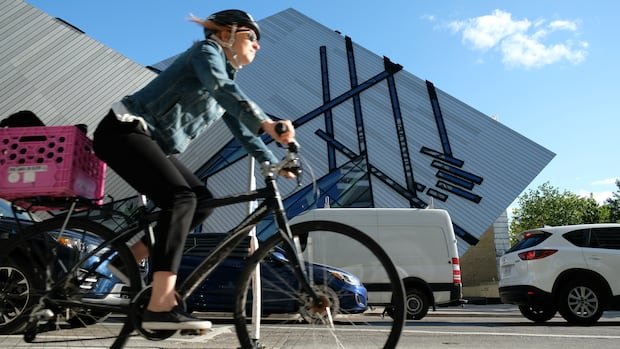
On Tuesday, the Ford government confirmed its plans to remove and redesign bike lanes on several of Toronto’s most heavily trafficked streets.
The provincial administration announced that it will start “restoring motor vehicle lanes” that were previously allocated for bike lanes on Bloor Street, Yonge Street, University Avenue, Queen’s Park, Queen’s Park Crescent, and Avenue Road, according to a statement released by the government.
The statement indicated that the province has also launched a request for proposals to “examine and propose design options” for reinstating vehicle lanes along some “segments” of the city’s busiest thoroughfares. These proposals will explore possibilities for either maintaining or redesigning bike lanes.
-
Ontario Court of Appeal says Ford can rip out Toronto bike lanes
-
Ontario aware bike lane removals may not reduce congestion, could make people less safe: internal documents
According to the statement, “The province is also promptly starting the restoration of motor vehicle lanes on Bloor Street W., commencing east of a 600-metre section at Clissold Road where vehicle lanes were reinstated in December 2025.”
This announcement follows an August ruling by Ontario’s Court of Appeal, which determined that Premier Doug Ford’s government is permitted to eliminate 19 kilometers of protected bike lanes in Toronto, overturning a decision by a lower court made in July 2025.

The Ford government is going ahead with bike lane removal and reconfiguration on some of Toronto’s busiest roads. The province said it is starting “immediately” with the lanes stretching from Islington to Royal York. Our reporter Haydn Watters spoke to people along the stretch.
Minister states restoring vehicle lanes will alleviate congestion
At an unrelated news conference on Tuesday, Ontario Transportation Minister Prabmeet Sarkaria addressed the subject of bike lane removals, asserting that bike lanes on routes such as Bloor Street W. contribute to traffic gridlock in the city.
Sarkaria noted that he had engaged with “numerous community members” regarding the bike lanes, claiming that their presence has adversely affected local businesses and is resulting in decreased foot traffic downtown.
“We need to reinstate the vehicle lanes to mitigate the congestion,” he stated.
In a separate conversation with CBC News on Tuesday, Sarkaria mentioned that the section of bike lanes the province intends to “immediately” eliminate along Bloor Street would “necessitate the least amount of effort” to restore car lanes.
When asked how the province plans to determine whether to remove or modify the identified bike lanes, Sarkaria responded that “the vehicle lane is prioritized.”
“In certain cases where both could coexist, we will take that into account and evaluate it,” he added.
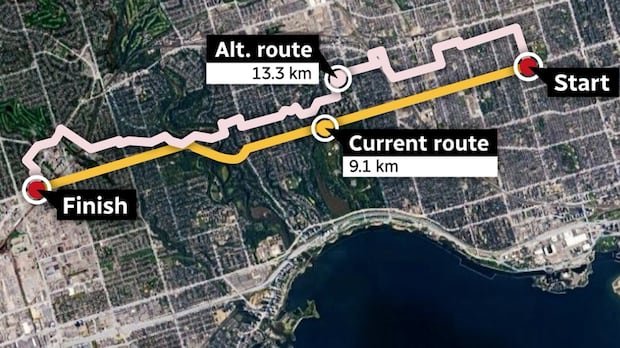
Ontario’s Court of Appeal has ruled the province is free to remove about 19 kilometres of protected bike lanes on Toronto’s Bloor Street, Yonge Street and University Avenue. CBC’s Trishla Parekh speaks to Cycle Toronto’s Michael Longfield on what alternate route options could look like.
When questioned about safety issues following the removal of bike lanes, Sarkaria stated that the existing traffic laws will still apply to both cyclists and motorists.
“We anticipate, just as on the hundreds of thousands of other streets in Ontario where both vehicles and cyclists coexist, that this will continue on the streets we are currently addressing,” he remarked.
Sarkaria also suggested that secondary roads, like King Street and College Street, could serve as more suitable alternatives for the bike lanes the province intends to remove or redesign.
Documents from the Ministry of Transportation, released during a court case challenging Bill 212 — the law that granted the province extensive authority over municipal bike lanes — raised doubts about some of Sarkaria’s claims.
These documents included a report from the engineering and urban planning company CIMA+, which indicated that removing bike lanes could lead to a rise in collisions for all road users by as much as 54 percent based on existing research.
A briefing note from 2024 from the cabinet office committee also mentioned that the suggested bike lane removals might not achieve the “intended results,” stating that current data and research “does not support the notion that eliminating bike lanes that occupy a lane of traffic would significantly ease congestion.”
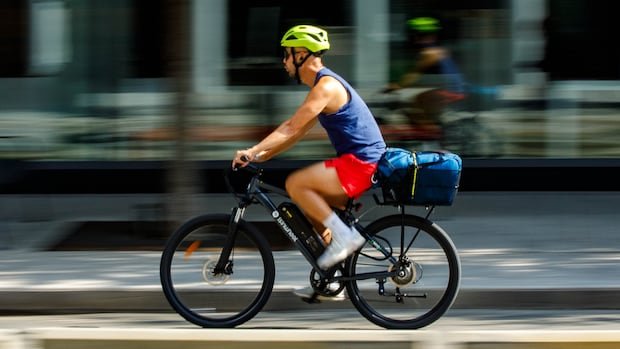
Friday’s decision by a panel of three Court of Appeal judges overturns a ruling in an Ontario court last year that found the province’s plans to remove bike lanes is unconstitutional. Now, as CBC’s Lane Harrison explains, Premier Doug Ford’s government can rip out 19 kilometres of protected bike lanes in Toronto.
Local resident Mike Field stated that he utilizes the bike lanes targeted for removal or modification “almost every day.”
“If there are no lanes on Bloor Street, I still have to shop on Bloor Street. I don’t own a car, can’t afford one, and I definitely don’t want to drive in this traffic. So I will be on my bike,” he said.
“If I need to reach Bloor Street on my bike, what am I supposed to do?”
Field recounted his experiences riding along Queen Street — which lacks designated bike lanes — to get downtown while living in the city’s western area, describing it as a “terrifying experience.”
“It’s very impractical to place [bike] lanes on the smaller streets when access to commercial areas is necessary,” he remarked.
Mayoral candidates express their views
The issue of bike lanes is already becoming a divisive topic in Toronto’s upcoming municipal elections.
Mayoral contender Brad Bradford had previously pledged to remove the Bloor Street W. bike lanes should he ascend to the mayoralty, despite being one of the councillors who initially voted in favor of them.
Mayor Olivia Chow, who is campaigning for re-election this autumn, released a statement on Tuesday asserting that the province should concentrate on addressing pressing issues and assisting families and workers, rather than engaging in “endless political conflicts with the City of Toronto.”
“I oppose any argument that creates a divide among road users, as it makes everyone less safe. Pedestrians, cyclists, and drivers all deserve protection on our roads,” Chow stated.
-
Tell us what’s at stake for you in Toronto’s municipal election
-
Bradford vows Bloor Street W. bike lanes are ‘coming out’ if he’s mayor
Mayoral candidate Chris Alexander commented that the province’s actions reflect a “governance failure” within city hall, and if elected mayor, he would propose a transportation plan that “actually works.”
“A capable city collaborates with the province to design solutions that have community backing. Toronto needs to ensure it gets things right initially, rather than becoming embroiled in expensive legal disputes for years,” Alexander stated.
Ontario Green Party Leader Mike Schreiner also shared his thoughts on the province’s announcement, branding it “performative politics” that “fails to tackle the underlying causes of congestion.”
“What we truly require are more dedicated bike and transit lanes, along with investments in transit that facilitate more efficient and affordable transportation for everyone,” he expressed on social media platform X.