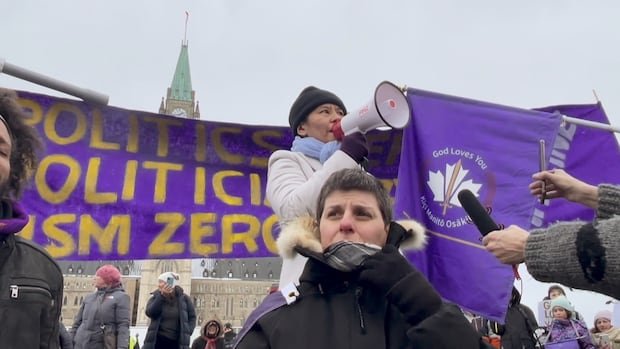
Just over a year ago, the RCMP conducted a raid on a purple schoolhouse in Saskatchewan that had been commandeered by a woman referred to as the “QAnon Queen of Canada.”
This event was the culmination of a movement that had been developing for years, involving a group commonly labeled as a cult, led by Romana Didulo — a self-proclaimed shapeshifting alien who enacted her own “laws” in her self-styled “Kingdom of Canada.”
Although the group has mostly disbanded, many of its former members remain. They are featured in a new documentary titled Queen of Canada, which will be broadcast on CBC’s The Passionate Eye on Wednesday, October 28.
While the film examines Didulo’s activities, she is not present as an interviewee. Instead, director Cristian Gomes focuses on those who once followed her, exploring their struggles with what they experienced, as some continue to hold onto the beliefs they once pursued.
CBC News spoke with Gomes and Mack Lamoureux, the first journalist to thoroughly investigate and report on Didulo, to understand the significance of these narratives.
This conversation has been edited for brevity and clarity.
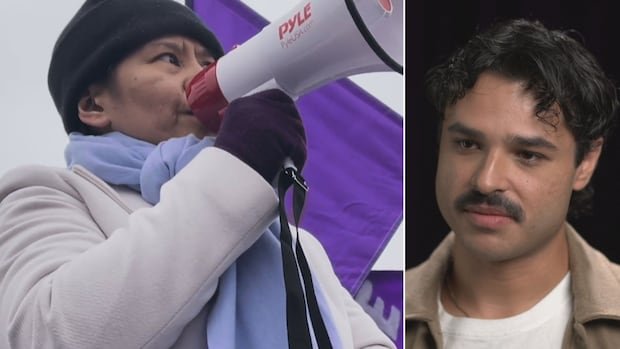
Director Cristian Gomes discusses his documentary, Queen of Canada, focusing on the notorious cult leader Romana Didulo.
You interviewed several individuals who once supported Romana. Although they have distanced themselves from her, as depicted in the film, they still cling to many of their distrustful beliefs regarding the media and government. Was it challenging to get them to share their stories?
Cristian Gomes: Finding these voices was challenging, primarily because I am not a part of the environment they are comfortable in. However, once I figured out how to connect with them online, through platforms like Telegram and other private chats, it became easier to engage them in conversation.
This experience was a significant learning opportunity for me as well. Initially, I found their beliefs quite disturbing and damaging, affecting various aspects of society. Nevertheless, I recognized that they are human beings who are lost and vulnerable, often exploited.
Mack, do you agree with Cristian’s perspective? Do you view this phenomenon as a broader case study reflecting societal divisions?
Mack Lamoureux: I see Romana as a precursor. She represents a potential future that we might not be destined for, but if we fail to address certain issues, we could find ourselves in similar situations. The disconnection from reality experienced by her followers was so intense — and in many respects frightening — that it is crucial for us to take measures to remedy this situation.
The outlook appears grim for many individuals. Additionally, algorithms are leading people down troubling pathways, and there are influencers and media outlets eager to promote conspiracies if it benefits their profits.
All these factors contribute to a hazardous mix that can drive individuals to align with figures like Romana, potentially leading to devastating consequences in their lives. As life becomes increasingly challenging for people, they may be more inclined to seek solace in harmful influences.
One moment that stands out is when one of your interviewees expressed that she once told her adult son she would take her own life if he received the COVID-19 vaccine. Reflecting on this, it seems to illustrate her feelings of isolation and neglect, which compelled her to make such a statement. Was that the message you aimed to convey?
CG: What is intriguing in the film is that the individuals making these extreme statements have undergone a process of radicalization: they joined a group, became disillusioned, and eventually left, yet they still maintain their beliefs. This highlights how marginalized these individuals have become.
They feel completely excluded from the political systems in this country and lack any means to express themselves.
The relationship dynamic between the interviewee and her son is compelling; despite differing opinions, her son learned how to maintain a connection with her. This connection played a crucial role in her ability to exit the group.
This scenario is common in high-control groups; having someone on the outside who listens without judgment can be instrumental in helping individuals leave.
-
Video
Crown stays charges against self-proclaimed ‘Queen of Canada’
-
Saskatchewan mayor stepping down now that ‘Queen of Canada’ cult is gone
Mack, having reported on cults and extremist groups for years, how does the healing process unfold in such contexts? Is there a societal solution to this issue?
ML: For many individuals, healing is not a straightforward journey; it involves navigating through various stages. Unfortunately, some may never fully recover from their experiences, and we need to be somewhat accepting of that reality. The focus should be on helping these individuals become more functional members of society rather than trying to impose our shared understanding of reality upon them.
I don’t believe there is a simple solution to this, as it appears to be a fundamental flaw within our societal structure. However, I think there are ways to improve the situation, as current technology is exacerbating these issues. Still, I don’t envision a future where everyone comes together and finds harmony. I wish I could be more optimistic, but…
-
INTERVIEW
Fjord’s Sebastian Stan, Cristian Mungiu on making a movie no one can agree on
-
Director Alex Gibney on terrifying Musk documentary: ‘It’s not a funeral; it’s a warning’
Based on your conversations with this group, Cristian, how has your perspective shifted? Is it possible to remedy this situation, or will those who feel overlooked and disconnected continue to do so?
CG: A significant part of this issue stems from people feeling voiceless. That is how they become marginalized. We all experienced the polarization during COVID.
It is essential to recognize that there exists a considerable number of Canadians who feel disenfranchised and have for quite some time. They lack faith in political systems, and some even believe they are outside of Canada, thinking they belong to another sovereign entity — that is how estranged they feel from society.
As we observe this phenomenon, we must acknowledge its existence and reach out to these individuals. It is crucial that we reintegrate them into society through dialogue and engagement.