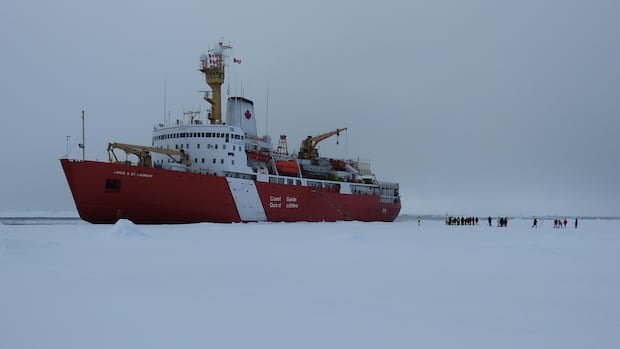
This month, the Canadian Coast Guard’s most robust and largest icebreaker successfully reached the North Pole, part of an initiative to settle conflicting claims in the Arctic.
The CCGS Louis S. St-Laurent, along with the Swedish icebreaker Oden, arrived at the North Pole on August 16.
The expedition aims to chart the seabed of the Arctic Ocean using specialized sensors, which researchers assert will aid in clarifying Canada’s claim to an area also asserted by Russia and Denmark through its autonomous territory Greenland.

This visit marks the sixth occasion the vessel has reached the pole, a location rarely visited by humans.
For Capt. Byron Briggs, it was his inaugural journey to the top of the world.
“It was even more exhilarating than I had anticipated once we successfully navigated to the pole and manipulated the ship enough to get the GPS to confirm we were at 90 North,” Briggs remarked, referencing the pole’s latitude.
“That was a truly remarkable moment for me, and judging by the cheers from my colleagues on the bridge, it was a significant event for all of us.”
Briggs mentioned they had a rendezvous with Santa Claus upon arriving at the North Pole.
On the ice, the crew engaged in a friendly hockey match.
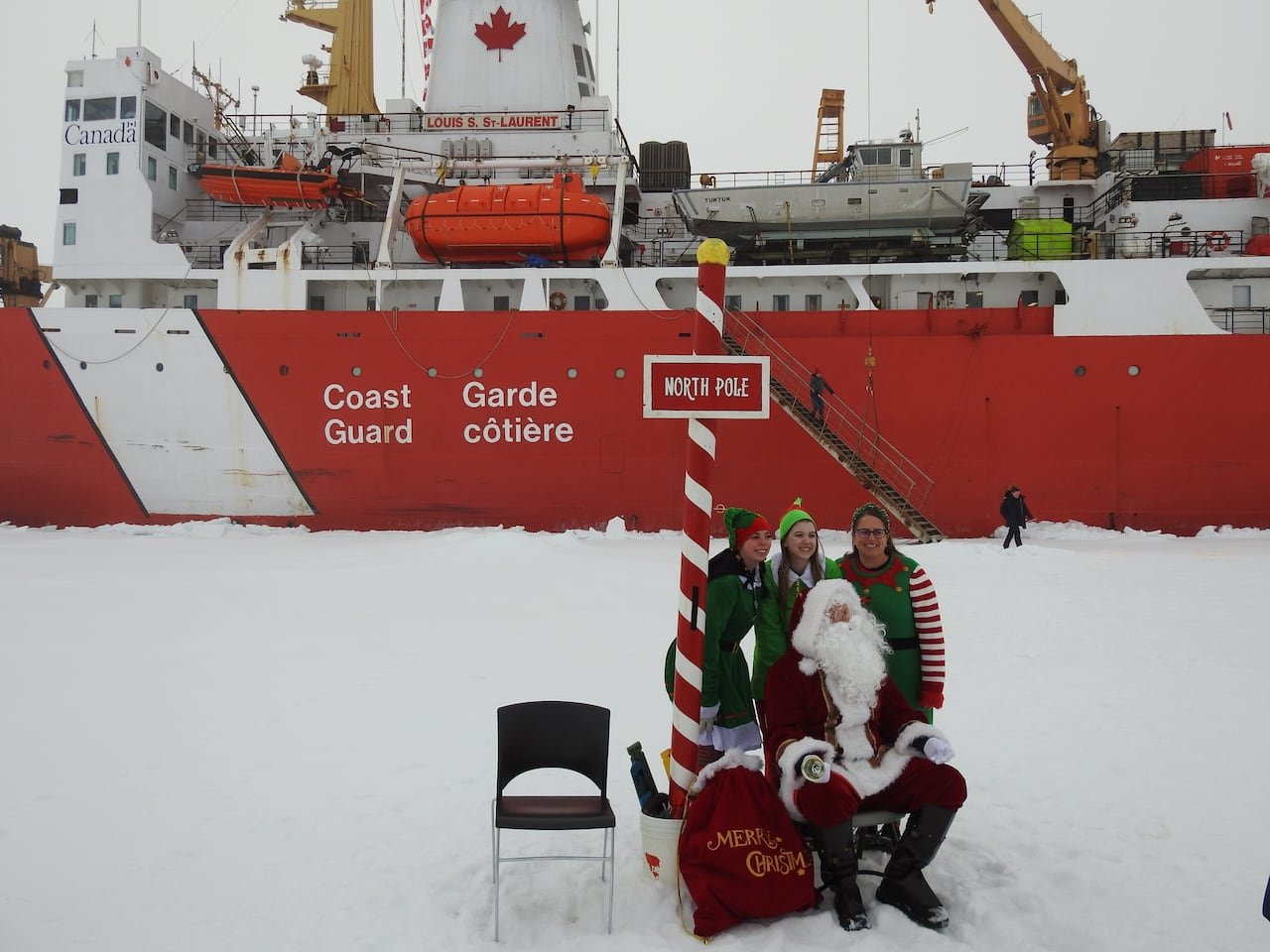
Crew dressed as Santa Claus and elves gathered for a photo at the North Pole (Submitted by the Canadian Coast Guard)
The vessel has a total crew of 77, comprising 47 core members, a physician, a nurse, a helicopter flight crew, and a scientific team of 22.
In 2019 and 2022, Canada met its obligations under the United Nations Convention on the Law of the Sea (UNCLOS) by submitting data that supports the nation’s claims on the seabed.
Kai Boggild, a scientist from the Geological Survey of Canada, is spearheading the research operation that is gathering this data.
“[This data] indicates where we believe these points are located,” Boggild stated.
The information gathered during this mission is intended to reinforce those claims, particularly concerning the Lomonosov Ridge, an underwater formation that divides the Arctic Ocean into two basins.
Boggild emphasized that the significance of this journey extends beyond geopolitical considerations and will yield essential scientific insights.
“There are numerous fundamental questions regarding the formation of the Arctic,” Boggild remarked.
“Thus, gathering this data for UNCLOS also enables us to enhance our understanding of the natural history of the Arctic Ocean and its evolution over millions of years.”
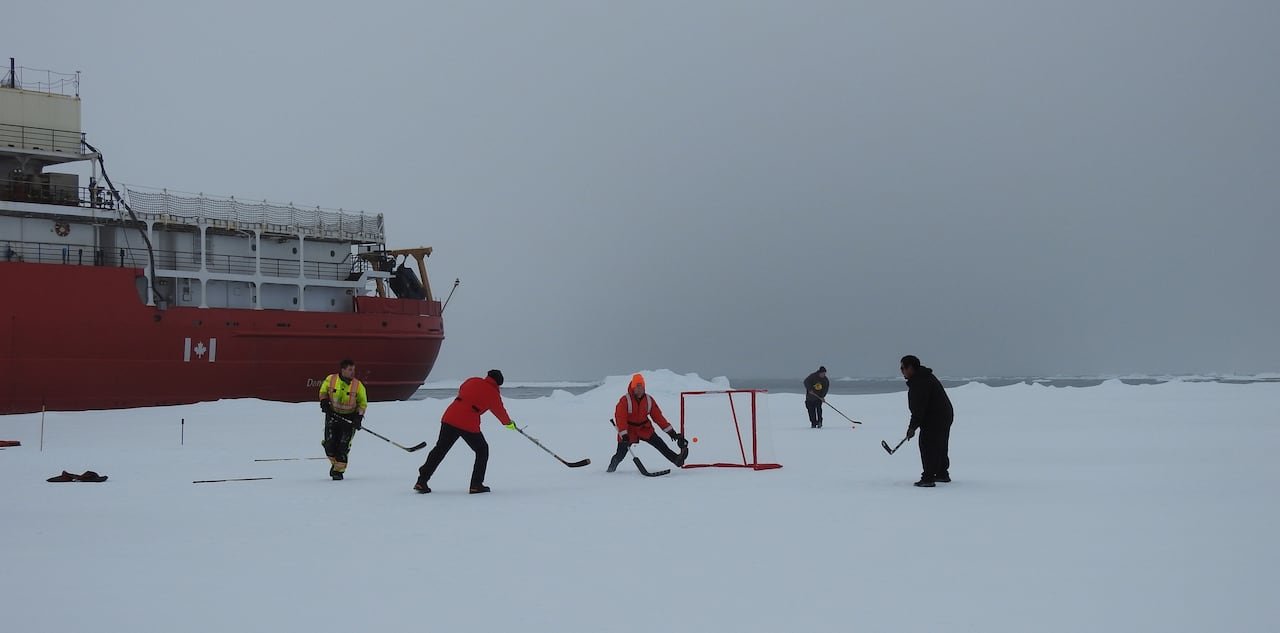
Crew members of the mission to the North Pole took part in a hockey game on the Arctic sea ice. (Submitted by the Canadian Coast Guard)
In a statement from the Department of National Defence, Defence Minister David McGuinty highlighted that the mission of the ship serves various purposes, including reinforcing Canadian sovereignty in the area.
“The arrival of the CCGS Louis S. St-Laurent at the North Pole marks a significant milestone that showcases Canada’s ongoing commitment to the Arctic,” McGuinty stated. “This mission not only furthers scientific knowledge but also strengthens our presence in the North and reinforces Canada’s sovereignty and security.”
The crew of the Louis S. St-Laurent departed from their home port in St. John’s, Newfoundland, on July 8 and is anticipated to return in early November.
Tag: rewrite-pending