Citizens in the eastern German region of Saxony-Anhalt have decisively elected the far-right Alternative for Germany (AfD) to govern.
This marks a significant win for a party that was once marginalized, now recognized as a right-wing extremist group by domestic intelligence agencies across various states, including Saxony-Anhalt, with some members criticized for invoking Nazi rhetoric.
Analysts suggest that this victory on Sunday highlights a profound crisis in traditional politics in Germany and signals to right-wing populists globally, just before several regional and federal elections in the European Union, that the political landscape may be shifting in their direction.
“I’m incredibly thrilled and immensely proud of our team here in Saxony-Anhalt,” Alice Weidel, the federal co-leader of the AfD, remarked to CBC News at the election media center in Magdeburg, the state capital.
“We bear a substantial responsibility, not only in Saxony-Anhalt but across all of Germany.”
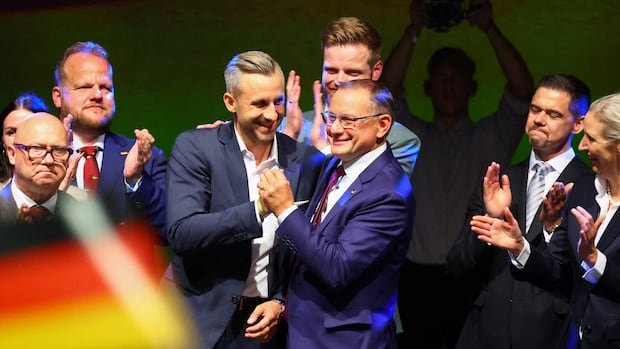
The AfD, or Alternative for Germany, achieved a notable victory on Sunday evening, yet fell short of a majority. This could potentially mark the nation’s first far-right state government since World War II.
The AfD in Saxony-Anhalt pledges to enhance relations with Russia, prohibit Pride flags in educational institutions, and establish separate classrooms for children of refugees. They advocate for “remigration,” a term frequently employed in far-right discussions referring to the large-scale deportation of individuals from migrant backgrounds.
“Anyone who is truthful, respects our laws, and is legally in Germany should not fear our party,” stated Martin Reichardt, chairman of AfD Saxony-Anhalt.
Reactions from Elon Musk and Trump
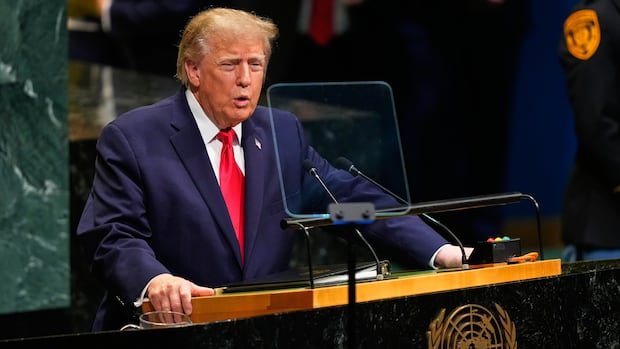
AfD representatives in Saxony-Anhalt have commended U.S. President Donald Trump as an inspirational figure, even adopting the slogan “Make Saxony-Anhalt Great Again” during their campaign, reminiscent of Trump’s MAGA initiative.
Some individuals in the United States have already reacted to Sunday’s results with congratulations.
Elon Musk commented “Gut gemacht!” (which means “well done”) in response to Weidel’s message on X congratulating Ulrich Siegmund, the AfD candidate for Saxony-Anhalt, on his victory. Musk had previously endorsed the party at a rally in Saxony-Anhalt in 2025.
Trump also shared a screenshot of the initial election results on his Truth Social account on Sunday night.
Siegmund indicated that Germany’s success relies on more “sensible diplomacy” with nations like the U.S. and Russia.
“The momentum is still favoring the right-wing populists,” noted Oliver Schmidtke, former director of the Centre for Global Studies at the University of Victoria in B.C.
“I believe right-wing populists worldwide interpret this as evidence of profound dissatisfaction with traditional parties.”
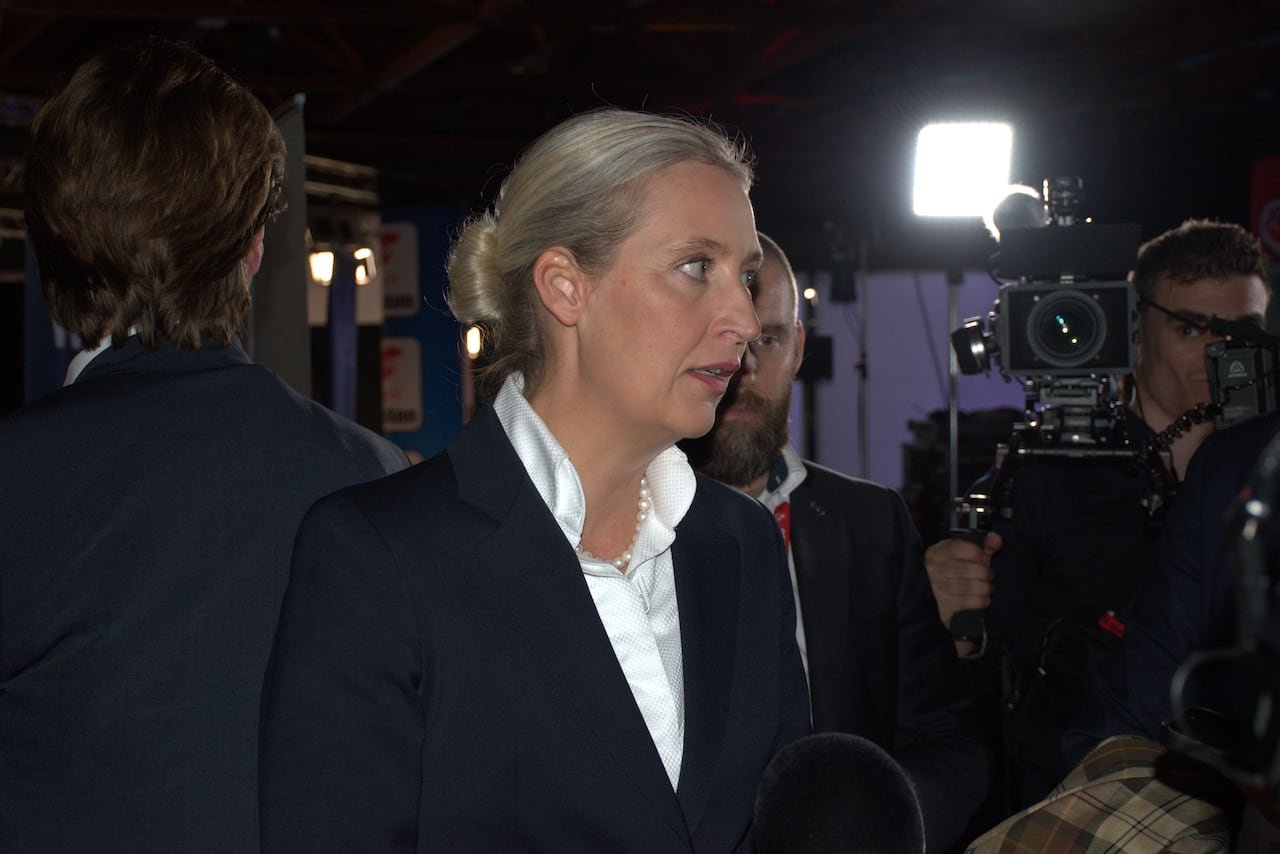
Alice Weidel, federal co-leader of the AfD, in Magdeburg, Germany, on Sunday. (Mona Schulze/CBC)
The outcome is an unprecedented setback for established political structures in Germany, according to Marcus Böick, a professor at the University of Cambridge specializing in modern German history.
Voters in rural regions, which are abundant in Saxony-Anhalt, feel overlooked by the so-called elites in Berlin, he explained. This vote serves as a protest.
“The situation is quite dire at present,” remarked Böick, who hails from Saxony-Anhalt. He stated that many individuals in the former East Germany are still dealing with ongoing disparities, unemployment, and a lower standard of living compared to western states, even more than thirty years post-Berlin Wall.
“How do we escape this predicament?”
German Chancellor Faces Low Approval Ratings
The voter turnout for Sunday’s election was approximately 78 percent, as reported by the state election official, marking the highest turnout in Saxony-Anhalt since the reunification of Germany in 1990.
The AfD more than doubled its backing compared to the last election in Saxony-Anhalt in 2021, yet it fell just three seats shy of achieving an outright majority.
This implies that the party may encounter difficulties in forming a government or electing Siegmund to lead the state, as the German political framework typically requires a coalition of multiple parties.
During a press briefing in Berlin on Monday, Siegmund stated that the AfD will engage with various parliamentary factions and lawmakers to explore their willingness to support the party in governing Saxony-Anhalt.
“We will, of course, enter discussions to determine whether there are— and this is a crucial point today— individual parliamentary groups or specific MPs open to collaborating with us in addressing this historic challenge,” Siegmund expressed in German.
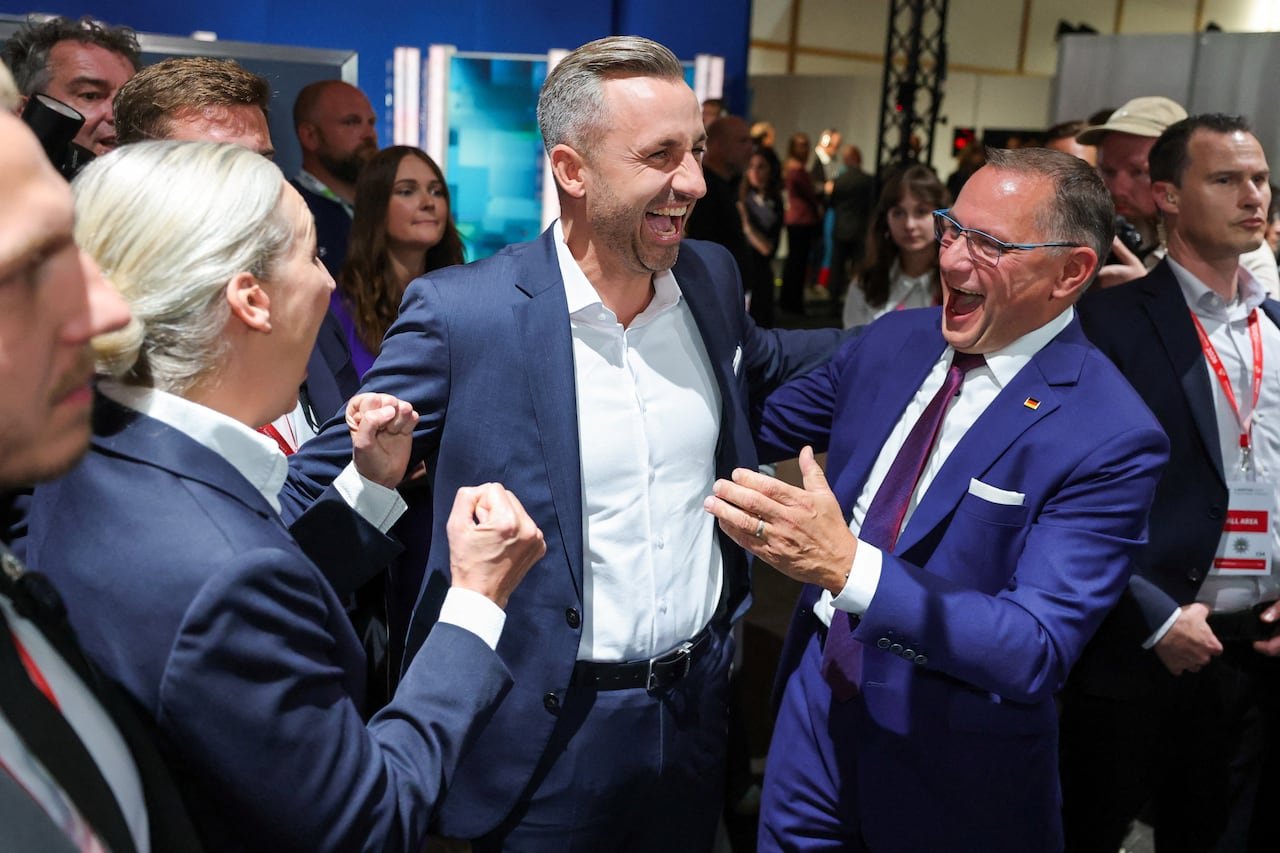
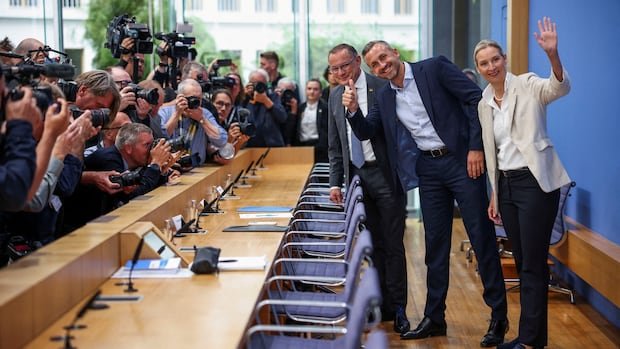
Weidel, Siegmund, and Chrupalla celebrate as preliminary results were announced on Sunday for the state election in Saxony-Anhalt. (Fabrizio Bensch/Reuters)
This victory also raises questions for the Christian Democratic Union (CDU), which experienced significant losses after 24 years of governance in Saxony-Anhalt. The CDU garnered only 17.2 percent of the vote, a drop from 37.1 percent in the previous election.
The center-right party also governs at the federal level in Germany under Chancellor Friedrich Merz, who is facing considerable unpopularity.
“I predict that the CDU will never win another federal election,” Weidel told reporters in German on Sunday.
Merz commented at a news conference in Berlin on Monday that the Saxony-Anhalt election results have personally unsettled him. He emphasized Germany’s unique obligation to safeguard its constitution due to its historical context and committed to implementing reforms to revitalize the nation’s sluggish economy.
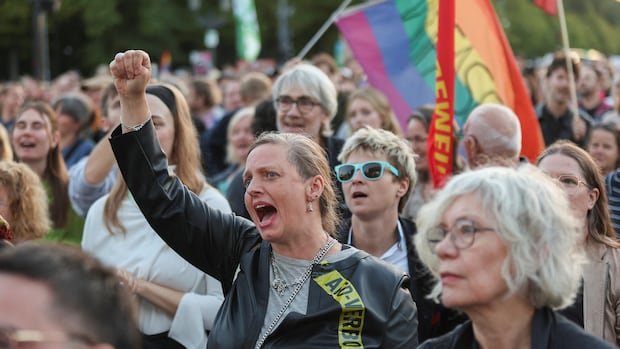
Following the far-right Alternative for Germany’s (AfD) victory in Saxony-Anhalt, thousands protested in Berlin over the party’s positions on LGBTQ rights and immigration. Meanwhile, AfD leaders celebrated, declaring ‘Germany is back.’
“We are all profoundly shocked,” said Merz, alongside the CDU’s lead candidate in Saxony-Anhalt, Sven Schulze. “This outcome was unexpected. We must, of course, accept it. These are the rules of our democracy.
“However, yesterday marked a pivotal moment not just in Saxony-Anhalt, but throughout Germany. This electoral result will have repercussions.”
In the past, the CDU and other mainstream parties have successfully kept the AfD out of governmental positions by forming coalition administrations and refusing to collaborate with them. This approach, referred to as “the firewall,” is designed to protect German democracy from threats to the country’s postwar liberal principles and constitution.

However, experts argue that the mainstream political parties have limited options to form a coalition that can exclude the AfD from power in Saxony-Anhalt, especially given the party’s substantial public support.
Currently, the AfD is also leading national polls at 27 percent, as per German election research firm Infratest-Dimap, and secured the second-highest number of seats in the 2025 federal election.

Siegmund arrives for a press conference in Berlin on Monday, a day after the eastern state’s election results. (Liesa Johannssen/Reuters)
A Boost for Russia
The AfD is also proposing significant changes to Germany’s current approach towards Russia. There are also growing concerns regarding the party’s connections to Russia, as the AfD could oversee state-level domestic intelligence services if they gain control.
Weidel indicated on Sunday that the AfD aims to aid in peace negotiations amid the ongoing conflict between Russia and Ukraine, but analysts assert that the party maintains a distinctly pro-Russia viewpoint.
Members of the party have allegedly praised and visited Russia, and have called for an end to support for Ukraine; the Saxony-Anhalt AfD’s governing manifesto expresses a strong interest in maintaining positive relations with Russia both “economically and culturally.”
Kirill Dmitriev, CEO of Russia’s sovereign wealth fund and a longtime associate of President Vladimir Putin, took to X to commend the AfD party.
“AfD will restore Germany and Europe by championing the common-sense approach that migrant-friendly, warmongering Biden-think EU politicians attempted to eliminate,” Dmitriev wrote, concluding his message with handshake emojis representing Russia, Germany, and the United States.
Schmidtke indicated that Putin supports right-wing populist movements globally to create divisions and undermine democratic support.
“I’m certain that the Kremlin is celebrating this election result, as it signifies a party with strong pro-Russian ties that no longer desires to support Ukraine,” Schmidtke stated regarding the election results in Saxony-Anhalt.
“This suggests that maintaining a united front in Europe in support of Ukraine will become increasingly challenging.”
Merz asserted that the election results would not alter Germany’s ongoing support for Ukraine and pointed out existing threats to the country’s internal security.
“I want to emphasize this clearly: 2,500 kilometers east of here, there are those who are particularly pleased with this election outcome,” Merz remarked, alluding to Russia.
It remains uncertain when a potential coalition government for Saxony-Anhalt might be established or if Siegmund will be able to take the lead in the state.
The AfD is also leading in opinion polls in the nearby region of Mecklenburg-West Pomerania, which is scheduled to hold its state election on September 20, alongside Berlin.
Reporting for this story was funded in part by the Gordon Sinclair Roving Reporter Bursary.