U.S. President Donald Trump is asserting his commitment to utilizing military strength to promote his nation’s interests, which includes thwarting what he terms “hostile foreign adversaries” from expanding their influence in the Western Hemisphere.
In his address to the United Nations General Assembly on Tuesday, Trump issued a warning to Iran, threatening its destruction, claimed Venezuela’s oil as a prize of victory, and rationalized U.S. actions against alleged drug traffickers in the Caribbean.
He also cautioned that additional interventions might occur.
“We have acted with determination and quickness to transform the world stage and address issues that have troubled us for too long,” Trump stated.
-
Trump says deal struck to boost U.S. military presence in Greenland
-
Trump and Zelenskyy discuss potential for energy truce in face of new wave of strikes on infrastructure
“We are reasserting American strength, including military power, when necessary in our region and globally, to ensure a safer future for all of us.”
Trump’s 37-minute address at the yearly gathering of global leaders only briefly mentioned Russia’s ongoing war against Ukraine. He called for an end to the conflict but did not propose any new peace initiatives.
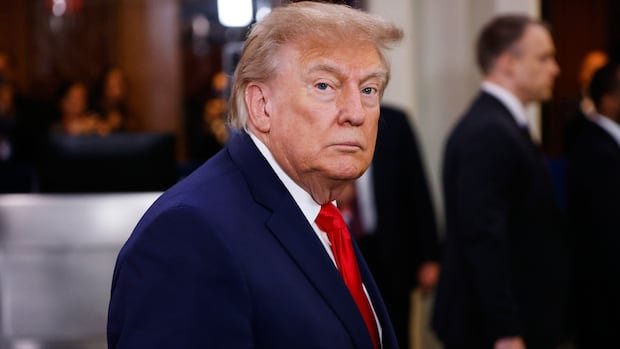
U.S. President Donald Trump, who spoke the United Nations on everything from artificial intelligence to Cuba’s ‘failed state,’ says he has a ‘big decision’ ahead on Iran. Trump said he believes ‘we’ll make a deal’ but also raised the possibility he could ‘annihilate the Islamic Republic’ and never give them a chance to harm other nations again.
A significant part of his speech focused on the Western Hemisphere, reflecting his recent national security strategy, released last December prior to Trump initiating the mission to capture Venezuelan President Nicolás Maduro and joining Israel in the conflict against Iran.
The official strategy document, which received commendation from the Kremlin, advocates for the revival of the Monroe Doctrine, the 19th-century assertion of U.S. dominance over the Western Hemisphere.
‘Vicious gangs, bloodthirsty cartels’
Previous U.S. administrations have permitted much of the area to be “dominated by vicious gangs and bloodthirsty drug cartels, destabilized by uncontrolled migration and infiltrated by hostile foreign adversaries — foreign, sick, demented adversaries,” Trump stated.
“But that will not happen any longer,” he added.
-
Trump’s Venezuelan oil deal: What we know and how it could impact Canada’s oil industry
-
Analysis
Venezuelans of all stripes are denouncing Trump’s ‘biggest oil deal ever’
“Our actions in Venezuela serve as evidence that the United States will no longer tolerate threats to America establishing a presence anywhere in the Western Hemisphere, and if required, we will utilize our unparalleled military power to protect the essential national interests of the United States.”
He boasted about the agreement that grants the U.S. control over a significant portion of Venezuela’s oil production. “To the victor go the spoils,” he proclaimed.
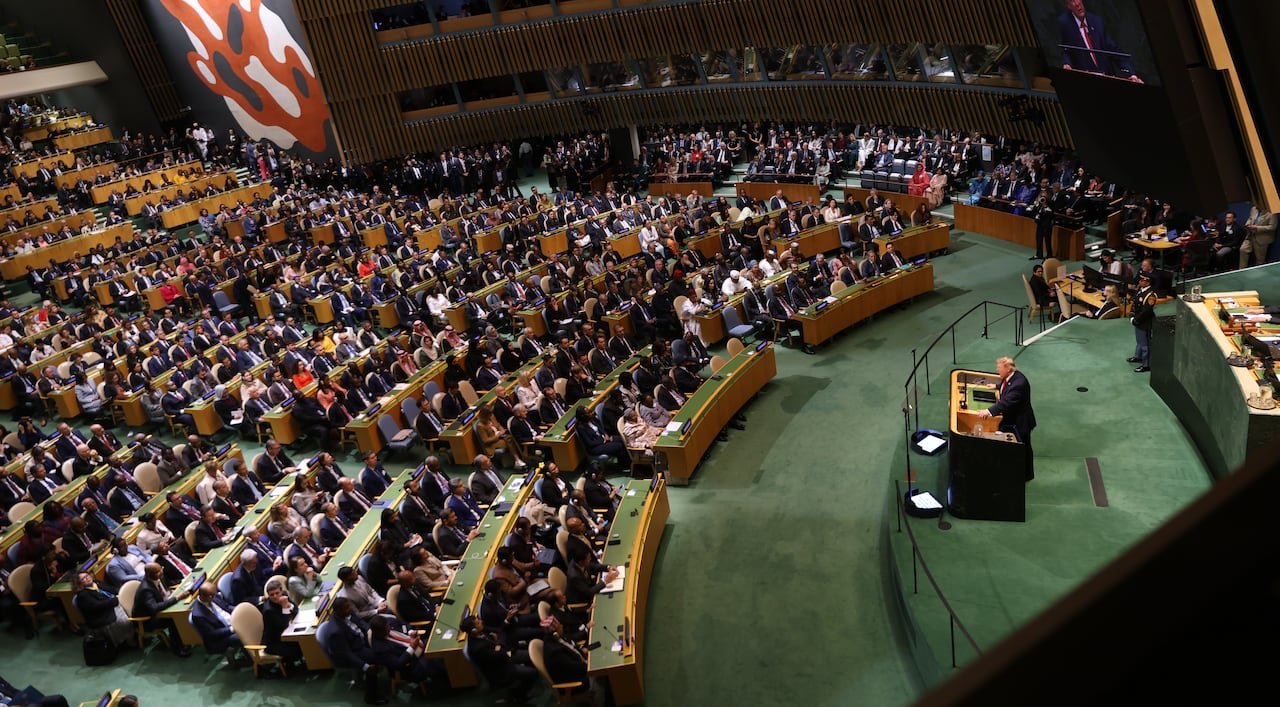
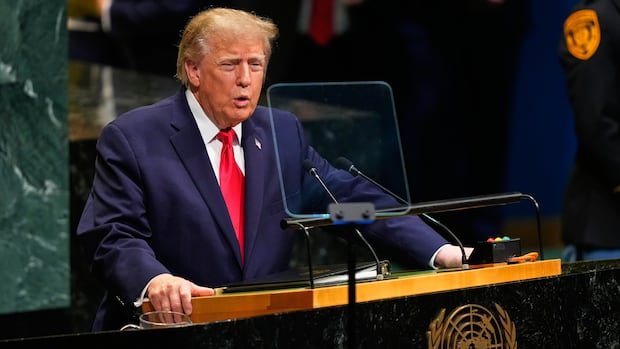
Trump’s speech to the General Assembly lasted 37 minutes, and it included scathing criticisms of the UN. (Heather Khalifa/The Associated Press)
The address highlighted not only the significance of the Western Hemisphere to Trump’s viewpoint but also his belief that the area poses a potential threat, according to Shannon O’Neil, a senior vice-president at the Council on Foreign Relations, a Washington, D.C.-based think tank.
The statement positions the U.S. to “assert control, if not dominance, in this hemisphere,” O’Neil informed reporters during an online panel discussion on Tuesday.
She perceives the Trump administration’s strategy toward Latin American governments as “a concerted effort to influence and support those that align ideologically.”
Canada gets a pass
Canada was not mentioned in the speech, indicating that the U.S. president has more pressing concerns than the trade tensions with his nation’s northern neighbor.
However, Trump did address Mexico, labeling it as the center of drug cartel violence.
-
Analysis
Trade ‘war’ or not, are Canada and the United States now dug in?
-
U.S. may seek win with Mexico in wake of collapsed trade talks with Canada, says ex-negotiator
“It is unacceptable for the United States to share a 2,000-mile border with a territory controlled by enemy cartels. Therefore, Mexico must regain control of its land from the enemies of humanity,” he stated.
Trump also expressed that his administration is pursuing “fundamental change” in Cuba.
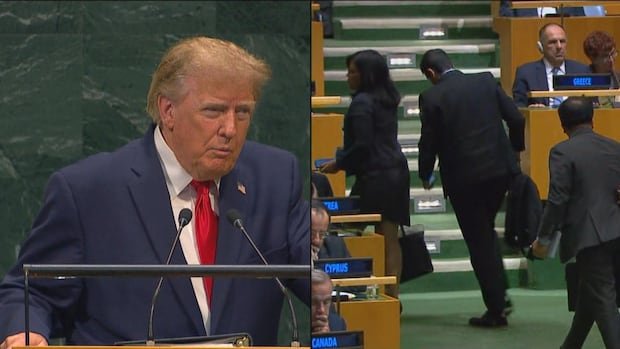
Members of Cuba’s delegation walked out after U.S. President Donald Trump called their country an ‘absolutely failed state’ during his speech to the United Nations General Assembly in New York.
“The communist regime is under significant pressure,” he remarked. “We will not permit a sanctuary for foreign adversaries to pose a threat to America on our doorstep.”
As Trump spoke, members of the Cuban delegation exited the General Assembly hall.
‘Do I annihilate the Islamic Republic?’
Trump also mentioned that he faces a “big decision” regarding Iran.
He described one possibility as forming a deal that would enable Iran to evolve into a “far greater country” than it has ever been.
“Or do I annihilate the Islamic Republic quickly, ensuring they have no opportunity to kill and destroy people and nations again? Should I drive them into hell, denying them any chance of survival or hope for future greatness or generations?”
-
UN mission finds ‘grounds to believe’ U.S. committed war crimes in strikes on Iranian school, sports centre
-
Saudi Arabia confirms Yemen’s Houthi rebels tried to attack its capital with a ballistic missile
This was Trump’s method of presenting both a potential route for negotiation and the repercussions of failing to pursue that route, according to Mara Rudman, a former U.S. deputy special envoy for the Middle East.
“Fairly clumsy is perhaps the most generous description I can offer,” Rudman commented to CBC News Network shortly after the address.
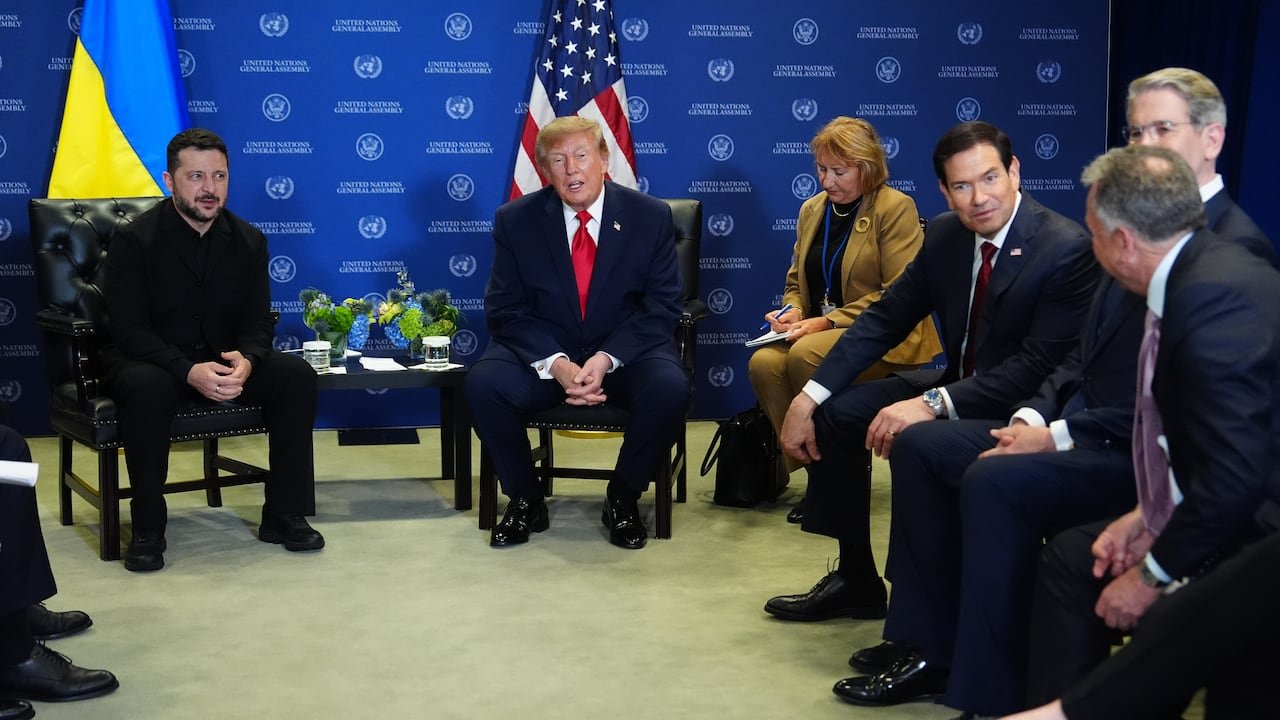
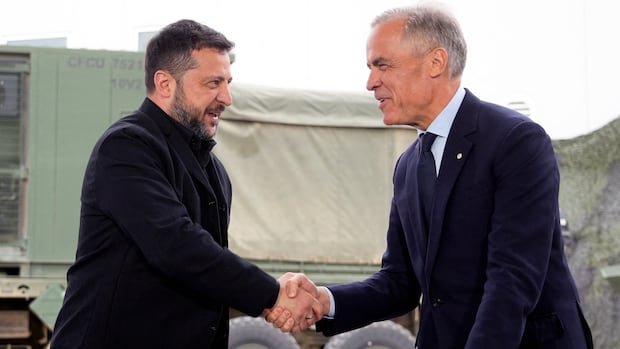
Trump and some of his top officials met Tuesday with Ukraine’s President Volodymyr Zelenskyy, left, on the sidelines of the UN General Assembly. (Julia Demaree Nikhinson/The Associated Press)
On Tuesday, Trump was scheduled to meet with the leaders of Gulf nations on the sidelines of the General Assembly.
“I anticipate they are quietly urging him to pursue the path of negotiation,” stated Rudman, who has served as a national security advisor in both the Clinton and Obama administrations.
Trump expressed confidence that a deal with Iran would be reached immediately following the U.S. midterm elections on November 3.
Rudman views this as an indication that the midterms — which polls suggest may jeopardize the Republican Party’s control of both the U.S. House and Senate — are influencing the president.
“I believe his audience was the American public rather than the Iranians or anyone else globally, despite the fact that he was addressing the UN,” she remarked.
-
CBC Explains
Your guide to the U.S. midterms, and why they’re crucial for Donald Trump
-
Will the U.S. midterm results affect Trump’s tariffs on Canada? Democrats think yes
During his address, Trump also labeled concerns regarding the dangers associated with artificial intelligence as a hoax and reiterated some of his long-standing criticisms of the United Nations, a central theme from his speech last year.
He further described the International Criminal Court as a rogue entity. This court was established by 125 countries in the early 2000s to prosecute war crimes and crimes against humanity, yet the U.S. has never ratified its treaty.