Authorities across the African continent are investigating how a woman, diagnosed with Ebola in Nigeria’s capital last week, contracted the lethal virus without traveling to the Democratic Republic of Congo, which has been the center of one of the most severe outbreaks in history.
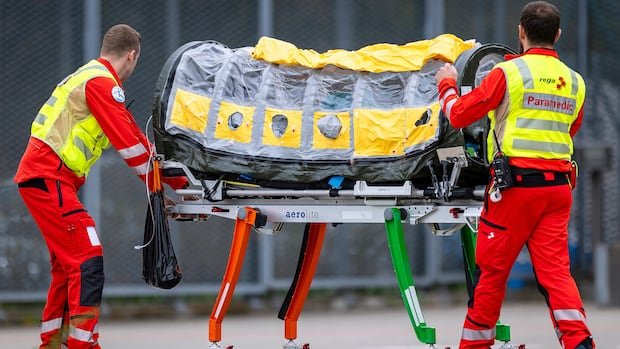
The individual, a Swiss citizen originally from Uganda, was airlifted from Abuja to Switzerland on Monday, as uncertainties persist regarding her potential exposure to the virus during her visit to Uganda.
In related news, a healthcare worker was killed over the weekend in the D.R.C. amid a continuing outbreak that is claiming more lives.
According to the latest figures from the D.R.C.’s Health Ministry, over 9,800 cases have been reported since the outbreak began in May, resulting in more than 4,700 fatalities, making it the most lethal Ebola outbreak in the nation’s history.
Here are the most recent updates regarding the four nations impacted by the Ebola crisis.
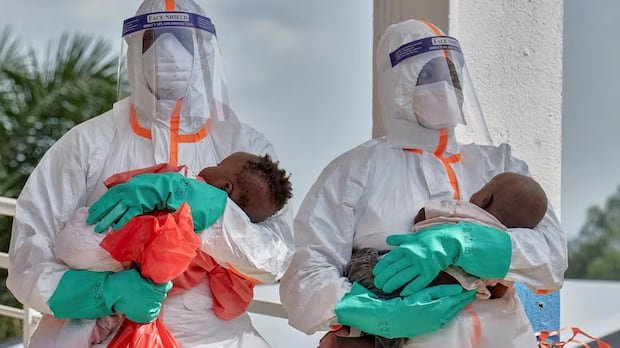
Death rates for children much higher than for adults, WHO estimates, while others orphaned.
Nurse killed in Democratic Republic of Congo
A nurse was fatally attacked and another healthcare worker sustained serious injuries while responding to an Ebola alert in the D.R.C., as reported by the World Health Organization (WHO).
This incident is part of a troubling trend of assaults on healthcare workers, which authorities claim is obstructing efforts to manage the rapidly spreading Ebola outbreak.
The assault occurred on Saturday in Bafwasende, located in the eastern Tshopo province, one of eight provinces experiencing the outbreak, according to WHO Director General Tedros Adhanom Ghebreyesus, who communicated about the incident via a post on X.
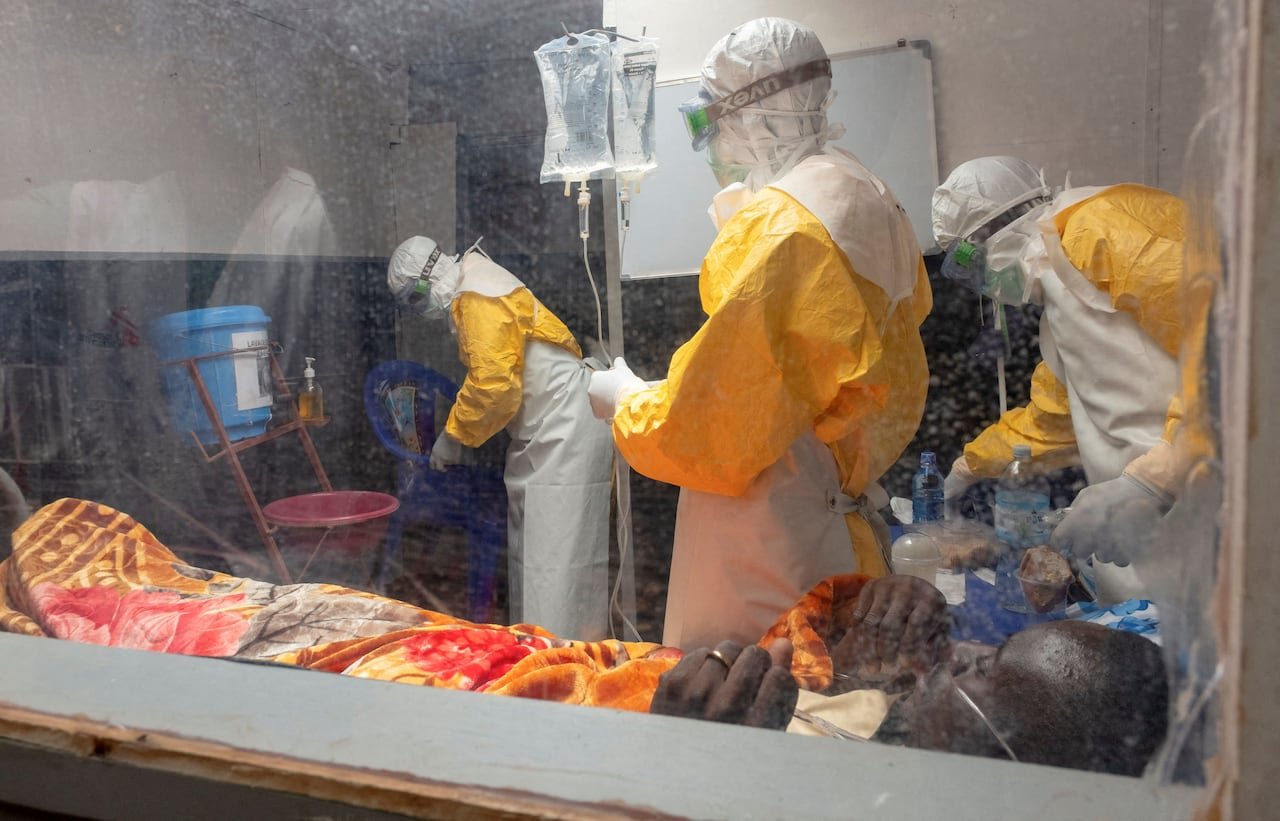
Doctors Without Borders physicians treat a patient inside the Kitatumba Ebola treatment centre in Butembo, D.R.C., on Sept. 23. (Gradel Muyisa Mumbere/Reuters)
-
Fears of a pan-African Ebola crisis growing as fourth country reports first case
-
Democratic Republic of Congo’s Ebola outbreak is now the deadliest in its history
“All individuals working to safeguard communities from this deadly virus must be able to perform their duties with dignity and security. Healthcare must always be defended,” he emphasized.
Dr. Mohamed Yakub Janabi, the WHO’s regional director for Africa, also denounced the attack on X.
“Misinformation and fear should never incite violence,” he remarked. Local officials have not yet released any statements regarding the attack or its perpetrators.
Last month, a Congolese politician was murdered in North Kivu, a conflict-ridden province that has the second-highest number of confirmed cases but the highest fatality ratio.
He was killed after defending the government’s Ebola response in public. He had been urging the public to adhere to response measures, including social distancing and hand hygiene, during a radio broadcast.
At the outbreak’s onset in May, two tents at health facilities were torched within a week due to protests from local residents.
Widespread skepticism exists regarding the government’s response to previous Ebola outbreaks, compounded by ongoing corruption issues.
In a more positive update, Ghebreyesus shared information from a treatment facility in Ituri province, which has reported the highest number of confirmed cases since the outbreak began.
He shared a video on X from the Mongbwalu community showing health workers joyfully dancing as they discharged their last two patients, noting that no new positive cases had been detected at the clinic in the past five days.
Ebola patient flown from Nigeria to Switzerland
Officials reported that the Swiss woman undergoing treatment for Ebola in Nigeria was medically evacuated to Switzerland along with her husband on Monday, as Nigerian authorities continued to monitor 52 individuals who had contact with her.
Nigerian Health Minister Muhammad Pate stated that the woman, who is the first confirmed case in Nigeria during the current outbreak, departed Abuja early Monday with his authorization.
Her health had improved significantly, and she was stable, alert, and able to communicate, he noted.
“This does not imply that she is no longer infectious, which is why strict protocols remain in effect,” Pate wrote on X. Her husband, a Swiss diplomat in Nigeria, has shown no symptoms.
He later confirmed that the couple arrived safely in Switzerland, with the woman receiving treatment in Geneva and her husband in isolation at a Zurich hospital.
Janabi from the WHO indicated that the evacuation was facilitated because the couple are Swiss nationals and that Nigerian medical teams had stabilized the woman after managing her during the acute phase of her illness.

Switzerland will assume responsibility for her treatment and oversee her husband, while Nigeria will keep tracking the 52 other contacts, Janabi noted.
“With the evacuation of the patient and her spouse, Nigeria currently has no reported Ebola cases,” he affirmed, emphasizing the importance of ongoing vigilance. Pate urged Nigerians to stay alert and adhere to containment measures.
The woman tested positive after returning to Abuja from Uganda.
Nigerian officials stated on Friday that they had not yet determined how she contracted the virus. The Swiss Foreign Ministry informed The Associated Press that she had not traveled to the D.R.C. and was thought to have contracted the infection while traveling to Uganda with her husband.
The Africa Centers for Disease Control and Prevention indicated that the first cases in Nigeria and Kenya had both passed through Uganda’s Entebbe International Airport on October 3.
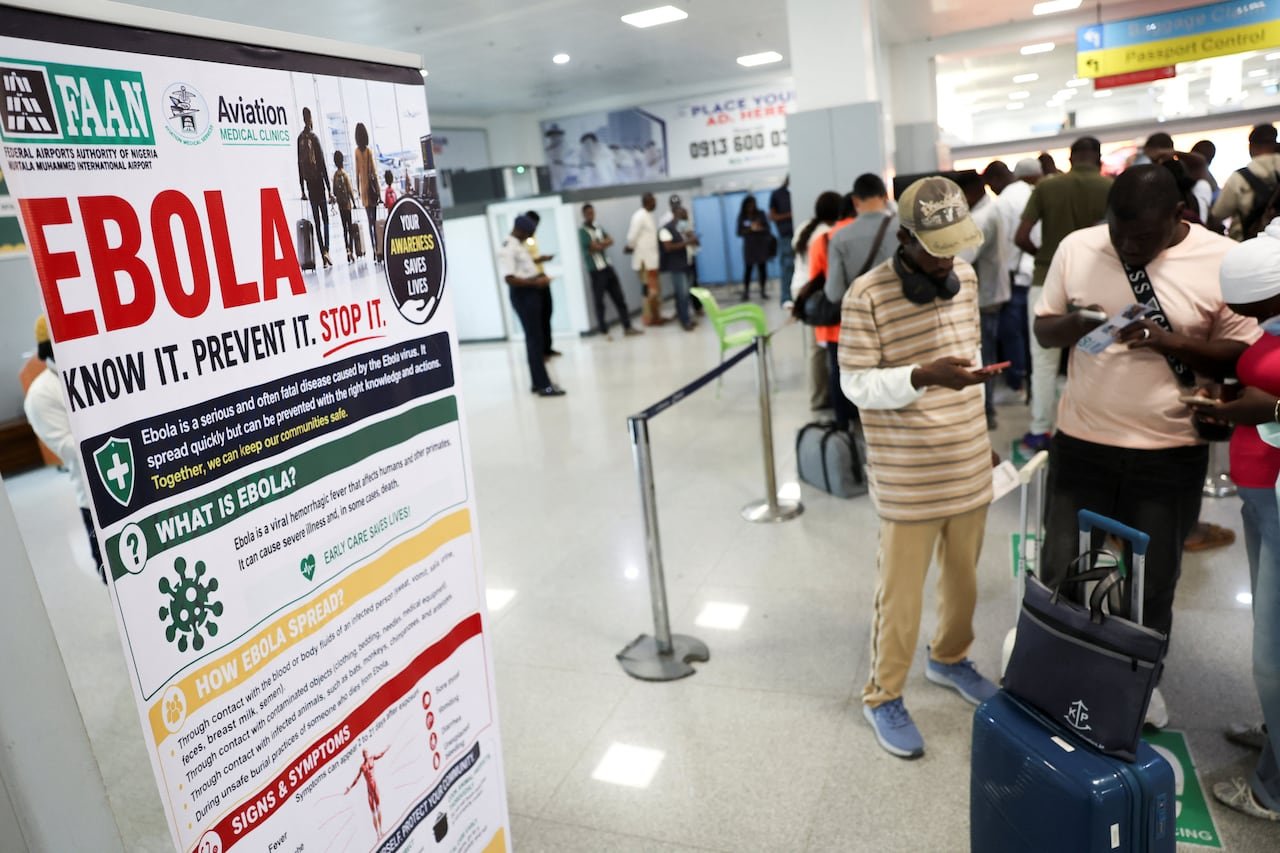
Travellers stand next to a banner displayed by a health screening station at Nigeria’s Murtala Muhammed International Airport, in Lagos, following reports of an Ebola case in the country last week. (Sodiq Adelakun/Reuters)
Uganda implements quarantine rules
Uganda has announced that it is looking into the Nigerian case, but asserts that the nation remains free from Ebola after declaring the end of its latest outbreak in July.
However, the government is enhancing border security to prevent the spread of the Ebola virus, now mandating that citizens returning from the D.R.C. undergo a 21-day quarantine at their own expense, the Health Ministry stated on Sunday.
Border controls were initially implemented in May, restricting all but essential travelers, including humanitarian workers and truck drivers, who are subject to health screenings.
Individuals with a history of travel to the Congo are prohibited from transiting through Uganda, including on charter flights.
Under the new regulations announced on Sunday, nonessential Congolese travelers will be sent back through the nearest border crossing at their own expense, while those entering illegally may face legal repercussions, according to the Ugandan ministry.
Health screenings have intensified at Entebbe International Airport and on land borders, with all arrivals required to fill out a passenger locator form and undergo health assessments, including diplomats and United Nations staff.
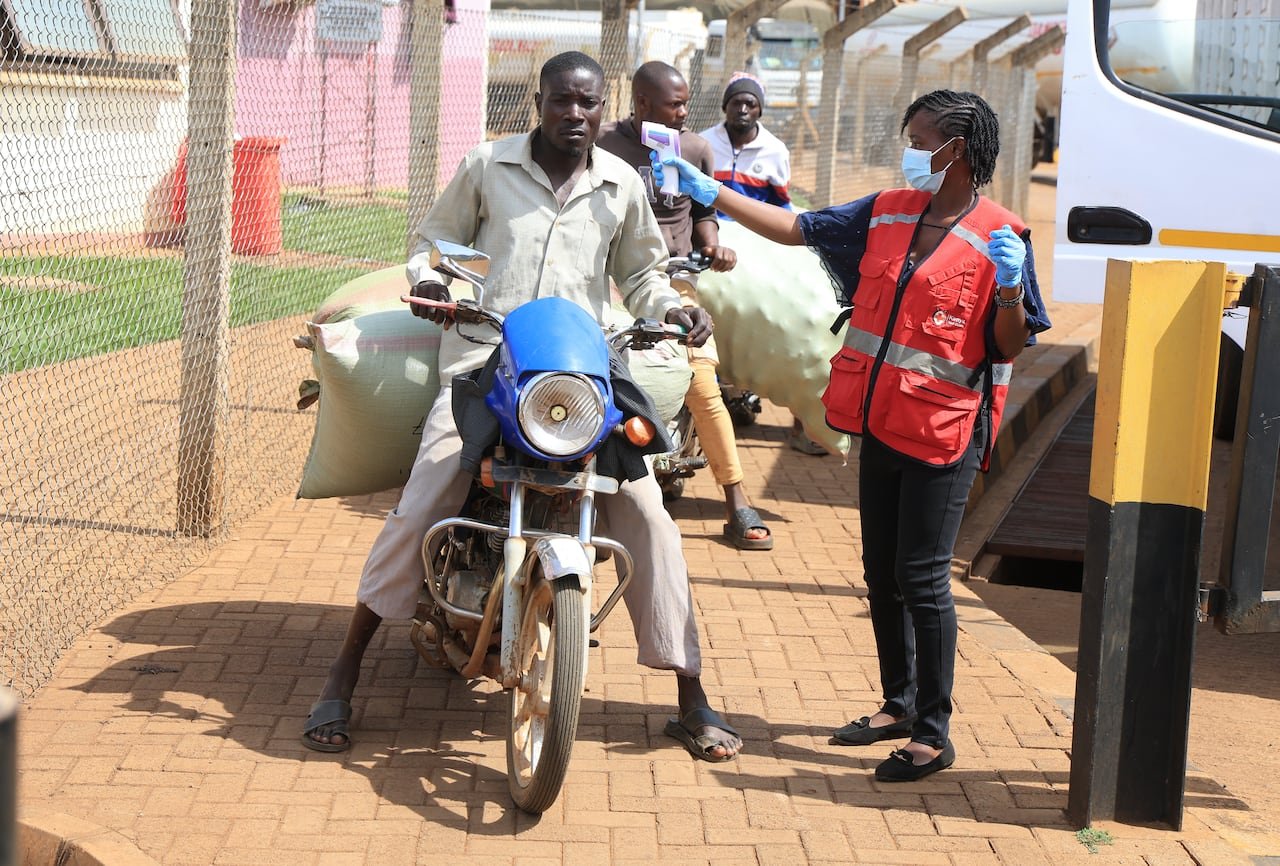
A Kenyan health worker checks the temperatures of travellers crossing from Uganda to Kenya as part of measures to contain the spread of Ebola virus, in Busia, Kenya, on Oct. 15. (Andrew Kasuku/The Associated Press)
Kenya clears Ebola patient contacts
Kenya announced on Monday that it has released from quarantine the first group of individuals who had contact with its initial Ebola patient, marking a significant step in efforts to contain the infection to a single cluster.
The 20 individuals released completed 21 days of monitoring without exhibiting any Ebola symptoms and are in good health, stated Patrick Amoth, the director general of Kenya’s Health Ministry.
So far, Kenya has recorded nine Ebola cases, with two fatalities. The other seven patients are stable and receiving treatment, according to Amoth, who added that 98 others still in quarantine will be released in four phases starting November 3.
“This is an event worth celebrating,” Amoth remarked. “It also serves as a reminder that our work is not yet complete.”
The first Ebola case in Kenya succumbed to the illness in a Nairobi hospital on October 5, after which eight more individuals developed symptoms while in quarantine. On Friday, it was confirmed that a second individual had died.
Amoth stated that those exiting quarantine pose no threat to their families or communities and encouraged Kenyans to warmly welcome them back. “We cannot afford to let our guard down,” he cautioned.
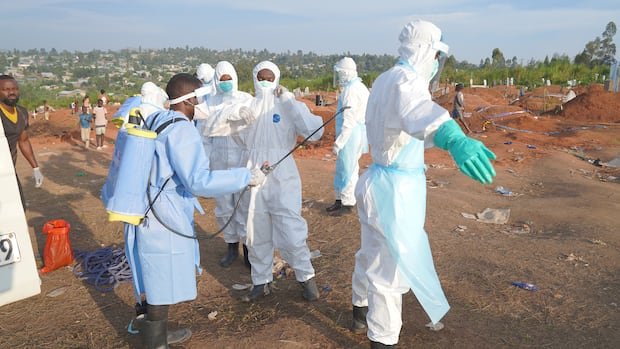
The Ebola outbreak in the Democratic Republic of Congo is officially the deadliest in the country’s history, and health officials worry the crisis will only get worse when children return to school.
Tag: rewrite-pending