
This week on Quirks & Quarks with Bob McDonald:
The reason geneticists flew a drone through a whale’s snot cloud
When humpback whales breathe out, they expel approximately 90% of the air in their lungs within a second, releasing a spray of mucus that can reach heights of up to four meters. Researchers have previously collected this mucus to examine proteins, hormones, bacteria, and viruses. However, for the first time, a group of scientists has successfully mapped entire genomes from the exhalations of humpback whales. Eadin O’Mahony, a marine biologist and geneticist from the North Coast Cetacean Society in British Columbia and St. Andrews University in Scotland, collaborated with the Gitga’at First Nation to deploy petri dishes attached to drones over 26 humpback whales. This innovative technique proved to be as effective as conventional methods and even captured DNA from the microbes residing in the whales’ respiratory systems. The findings were published in the journal Molecular Ecology Resources.

Researchers utilized commercially available drones fitted with petri dishes to gather genetic data from 26 humpback whales as they surfaced. (North Coast Cetacean Society)
Potatoes might be part of astronauts’ diet on future lunar outposts
Establishing a base on the moon presents numerous obstacles, with one of the most significant being how to provide food for its inhabitants. The lunar surface is coated with a fine dust called regolith, which is not conducive to agriculture. Nevertheless, Aymeric Goyer, a plant biologist at Oregon State University, along with his research team, has successfully grown potatoes in a blend of simulated lunar regolith and organic compost, suggesting that it may be possible to cultivate potatoes in space by 2040. Their results were published in npj Microgravity.

At Oregon State University, researchers are cultivating potatoes using a mix of simulated lunar soil known as lunar regolith and organic materials from Earth. (Oregon State University)
Sleeping spiders exhibit REM-like sleep patterns
For the first time, researchers have observed sleep activity in a spider. The research team, which included behavioural ecologist Nadja Geiger from the University of Bonn, examined whether spiders genuinely sleep and if they experience different sleep stages akin to humans and other animals. By employing high-resolution recordings of the Australian jumping spider Portia fimbriata, the scientists discovered that this species undergoes true regulated sleep with two distinctly identifiable stages, one of which resembles REM sleep, characterized by eye movements and muscle twitches. The findings were published in the journal PNAS.
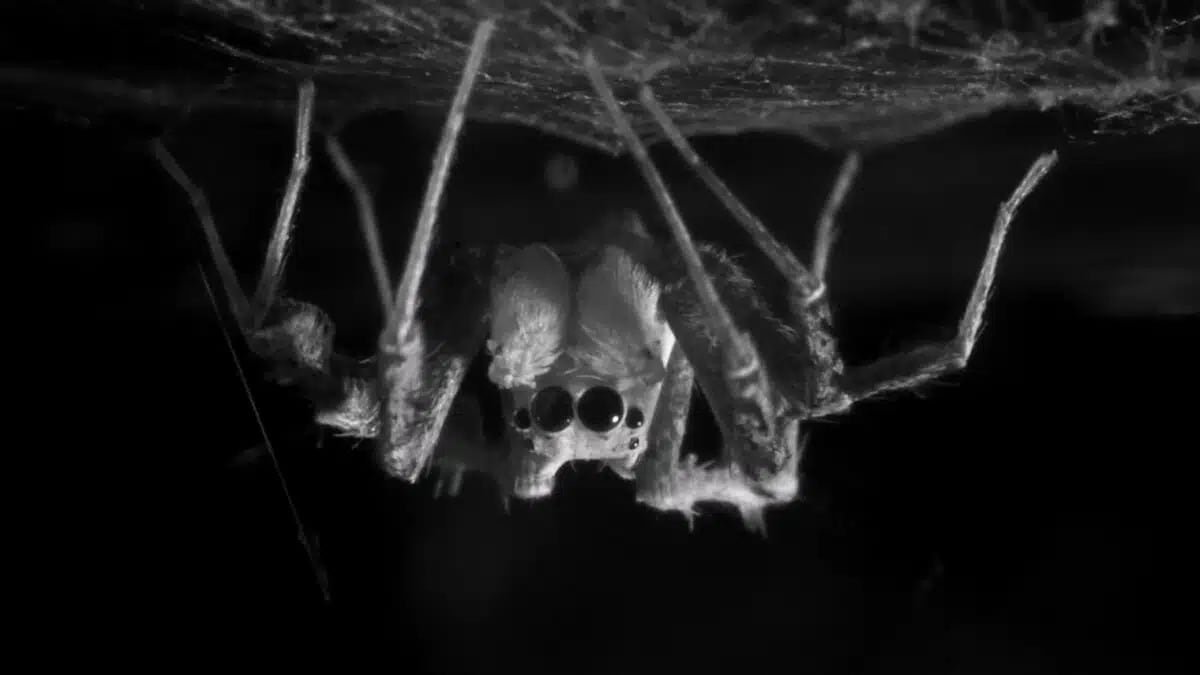
The spider Portia fimbriata in a sleeping position, suspended upside down beneath its web. (Daniela C. Rößler)
Ancient rocks indicate the onset of plate tectonics occurred 2.6 billion years ago
Massive slabs of rock, known as tectonic plates, move across the Earth’s surface, colliding with one another or drifting apart. These movements can lead to catastrophic earthquakes or volcanic eruptions, create mountain ranges, and mold our continents and oceans. However, Earth was not always this dynamic. In a recent study published in the journal Proceedings of the Royal Society A, researchers investigating ancient rocks discovered a chemical signature that signifies the period when this tectonic activity commenced, paving the way for life. Janne Liebmann, a geochemist at Curtin University in Australia, along with her team, found that this signature was present in rocks until 2.6 billion years ago, after which it vanished, marking the initiation of plate tectonics.

Janne Liebmann and her research partner gathering rock samples in the Western Australian outback. (Bryant Ware)
Animal communication exhibits a shared rhythm
Male fireflies flash their lights synchronously to catch the attention of females. However, a study of this synchronous behavior revealed that their light pulses appeared to coincide with the chirping of nearby crickets. Guy Amichay, an applied mathematician at Northwestern University, became particularly interested when he discovered that many musical compositions maintain a similar tempo. In a recent study published in PLOS Biology, Amichay and his team observed that a variety of animal signals cluster into a frequency “hotspot” around two beats per second. Vijay Balasubramanian, a theoretical physicist and computational neuroscientist at the University of Pennsylvania who co-authored the study, remarked that neural circuits work at a similar rhythm, indicating that animal brains may be attuned to recognize signals at a specific tempo.
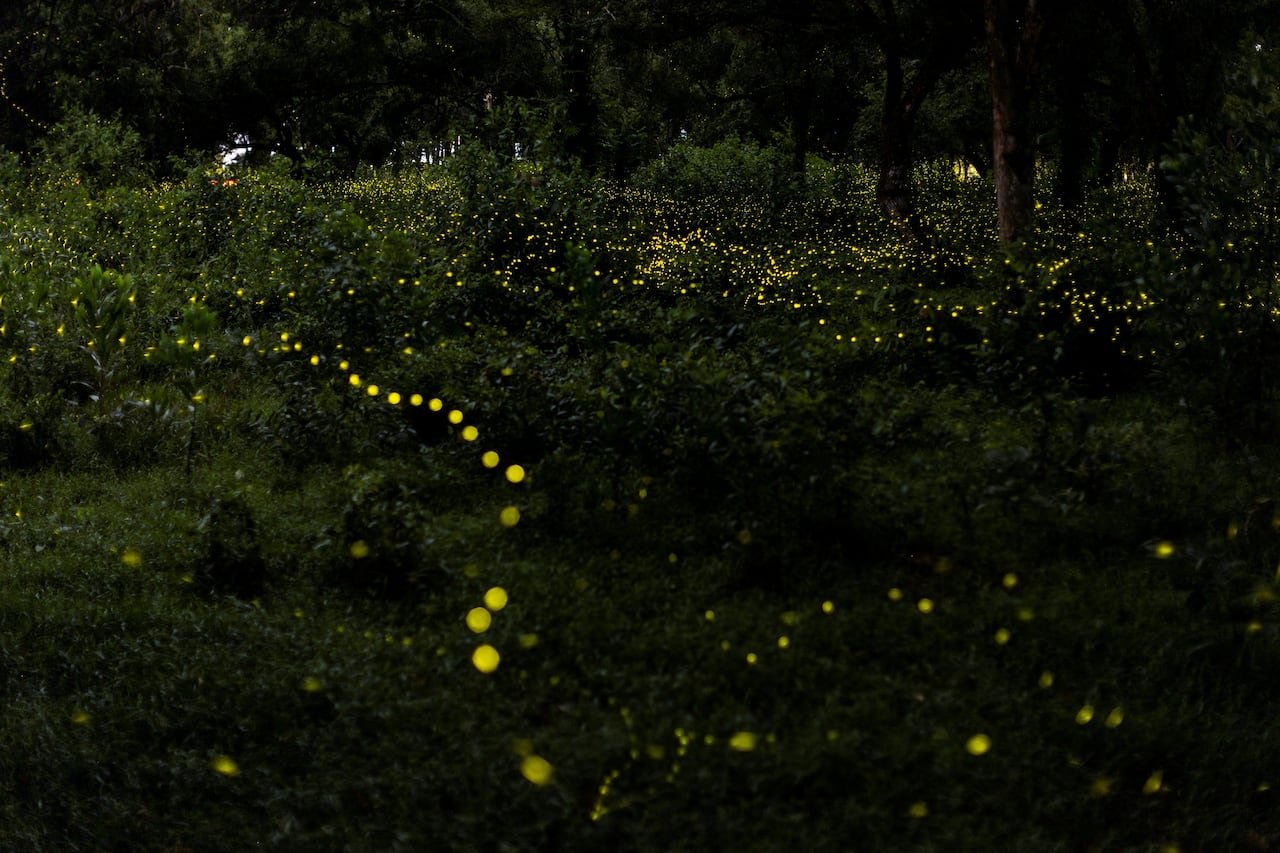
Researchers studying firefly swarms in Thailand found that crickets were chirping in harmony with the flashing fireflies. (Athit Perawongmetha/Reuters)
Tag: rewrite-pending