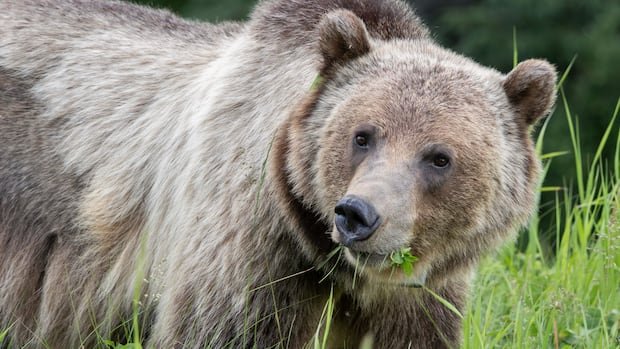
In 2024, Alberta witnessed the highest number of grizzly bears killed by humans in recorded history, as per data released by the provincial government.
The province regularly updates its website with information regarding human-induced grizzly bear mortality statistics, with figures available from 2005 to 2025.
During 2024, there were 40 confirmed grizzly bear fatalities, caused by factors such as poaching, vehicle accidents, and lethal actions taken by law enforcement.
The records indicate that 21 grizzlies were killed through “agency removals,” meaning they were eliminated by officials from Alberta Fish and Wildlife Enforcement Services or other law enforcement agents.
These figures represent the highest annual total ever documented, marking the only year wherein more than half of the overall grizzly bear fatalities resulted from agency removals.
- 4 grizzly bears killed by hunters through Alberta’s ‘problem wildlife’ program so far
- Alberta’s latest roadkill numbers highest ever recorded by carcass monitoring program
Prior to this, the previous record for human-caused grizzly bear deaths was 29, noted in 2016, most of which were due to vehicle collisions.
Additionally, the former highest incidence of lethal removals by law enforcement was 12 out of 26 known grizzly deaths in 2023.
‘A hit list on male bears’
John Clarke, a retired officer from Fish and Wildlife, suggests that the rise in numbers for 2024 may be linked to the updated grizzly bear response guide issued in 2023.
This guide categorizes bears based on various criteria such as age, presence of cubs, and specific behaviors deemed problematic, including becoming accustomed to human presence, associating humans with food, or attacking livestock, pets, or people.
He notes that the revisions granted officers greater discretion in handling bear situations, while also simplifying the process for killing male grizzlies.
“They’ve sort of created a hit list for male bears,” he commented.
Of the 21 bears eliminated by law enforcement in 2024, 14 were male.
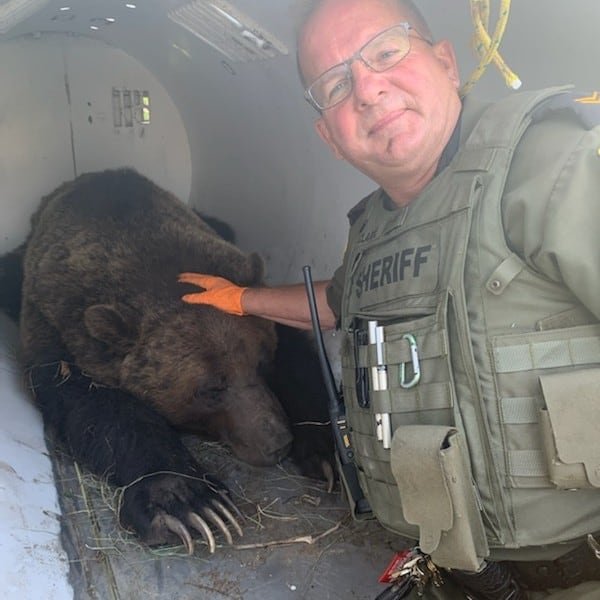
John Clarke, seen with a tranquilized grizzly bear from his tenure with Alberta Fish and Wildlife Enforcement Services, now runs the Canadian Bear Safety Authority. (LinkedIn)
According to the new framework, if a male grizzly is reported as habituated or food-conditioned for the first time and is outside the designated recovery zones in the province’s Grizzly Bear Recovery Plan, it can be killed.
If the bear is located outside recovery or support zones, it may be killed regardless of gender, unless it has cubs, in which case Clarke refers to it as receiving a “one get-out-of-jail-free card,” allowing for relocation on the first incident but resulting in death if the situation recurs.
“In population dynamics, females are more crucial than males since they are the ones that breed,” Clarke pointed out.
Grizzly bears exhibit low reproductive rates, typically starting to breed between five to eight years of age, with sows only producing one litter every three to five years thereafter.
Since 2010, grizzly bears have been listed as a threatened species in Alberta.
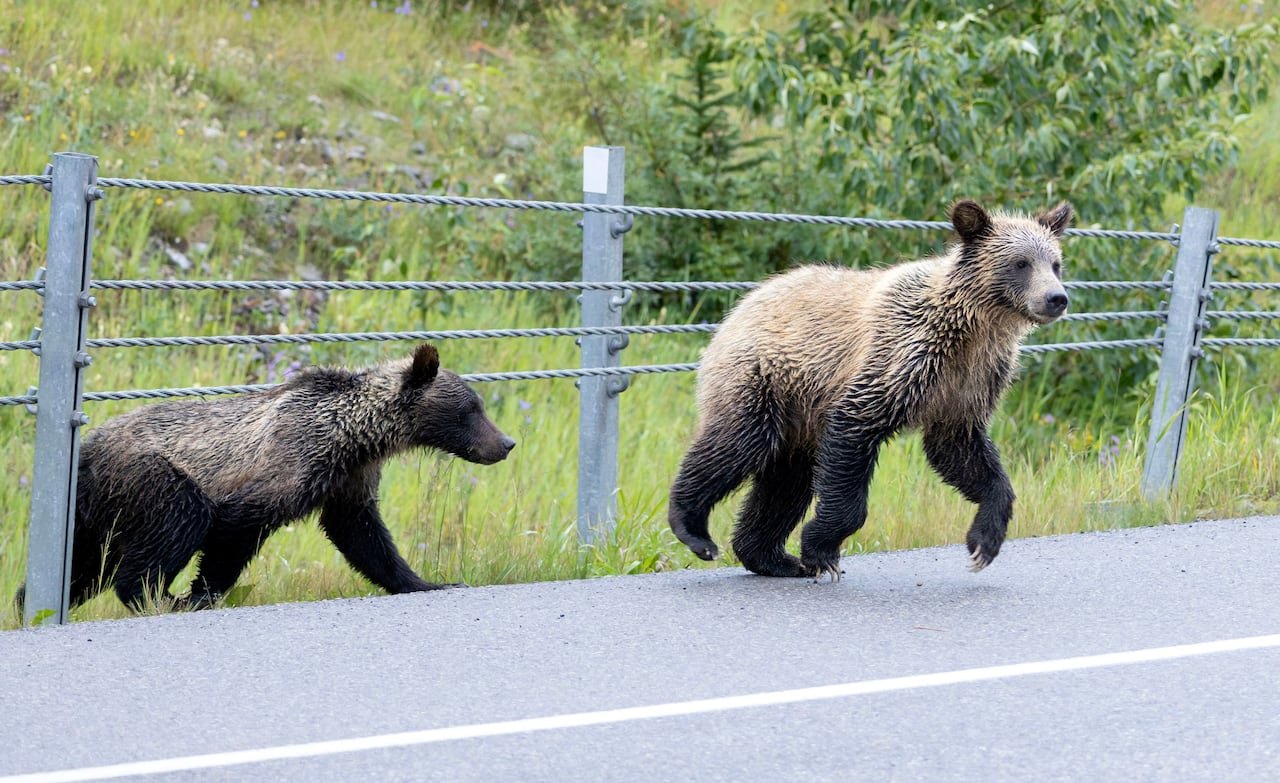
Two grizzly bear cubs crossing Highway 40 in Kananaskis Country. (Amir Said/CBC)
Even with the updated guidelines, an officer must still provide justification for killing a grizzly bear. Clarke indicated that they are still required to consult with others to determine the course of action. The guide also emphasizes that “preventative measures” — which may include non-lethal attempts to move a bear, closing areas to the public, or removing food sources that attract bears — should be the first response before deciding to capture or kill a bear.
In a statement to CBC News, the provincial ministry of Forestry and Parks expressed that “there is no universal solution to human-grizzly conflicts.”
- ‘No plans right now’ for grizzly hunting season in Alberta, minister says as rural residents call for hunt
- Alberta says hunting bears with dogs will protect caribou. The province’s former caribou manager disagrees
“The increase in human-related grizzly bear fatalities and agency removals in 2024 indicates annual fluctuations in conflict incidents rather than a singular, province-wide cause. In certain regions, bears were more prone to conflicts with humans, livestock, and other attractants,” the province stated.
The mortality statistics encompass various regions within the province and are not limited to specific areas.

Many black bears possess brown fur, which can lead to confusion between the two species. The province’s statistics reveal that 17 grizzly bears were killed after being mistaken for black bears between 2006 and 2021. (Amir Said/CBC)
The total number of deaths decreased to 18 in 2025, with six attributed to agency removals.
“Conflicts involving grizzly bears and Albertans can vary annually and are affected by a range of elements, including local bear populations, food availability, environmental conditions, and the presence of human attractants like livestock, grains, waste, and other food sources,” the province commented.
Clarke believes the reduction in 2025 may be due to various factors, including the possibility that specific bears responsible for issues with people and livestock were eliminated the preceding year.
- Grizzly bear trapped, killed after trying to break into central Alberta chicken coop
- Hunter mauled by grizzly bear west of Calgary
In 2024, the province reported two human attacks and 92 incidents involving livestock. In 2025, there were three attacks on humans and 80 on livestock.
These statistics, provided by Public Safety and Emergency Services, do not cover events occurring in parks and protected areas.
This year, the Alberta government has not documented any grizzly bear attacks on humans, although a grizzly attack occurred in Jasper National Park earlier this summer, and there have been 57 livestock-related attacks reported so far this year.
- 2 grizzly bears illegally shot along Alberta highway on same day, province says
- 3 grizzly cubs found in area of bear attack will be left alone for hibernation, province says
To tackle conflicts between grizzlies and humans or livestock, the Rural Municipalities of Alberta has requested the provincial government to permit grizzly bear hunting.
The sport hunting of grizzly bears was outlawed in 2006. In the previous year — the only recorded year with grizzly hunting figures included in the total mortality count — 73 hunting licenses were issued, resulting in 10 grizzlies being killed. A total of 23 human-induced grizzly deaths were reported that year.
Currently, the Alberta government estimates there are approximately 1,000 grizzly bears within the province, although there hasn’t been a provincial population survey since 2018.